






Introduction to Cold Weather Workplace Hazards
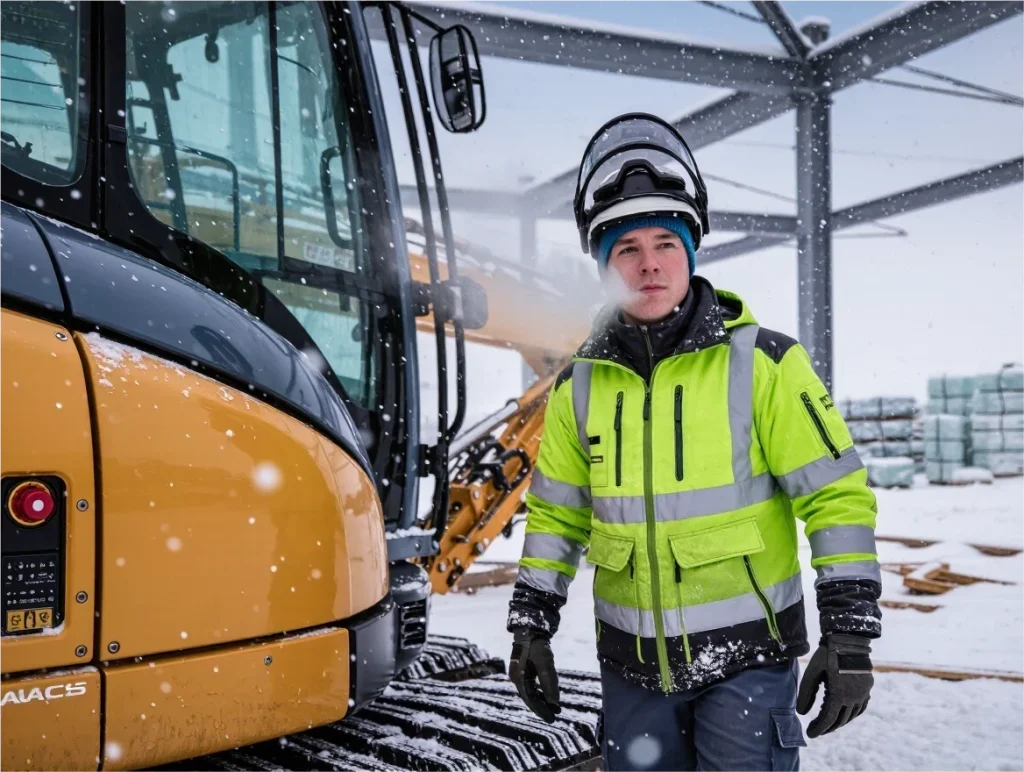
One of the most difficult environments that industrial workers have to endure is cold weather. The drop in temperature is accompanied by the rapid loss of body heat, which has the side effects of lower alertness, slow response, dehydration, and stiff and unsafe movement. Employees who work with ladders, tools, machinery, or heavy equipment have a large number of accidents. Hypothermia, frostbite, safety jackets, dehydration, and the hazard of visibility get rapidly augmented in frosty weather.
The companies should offer protective winter PPE that is safe, comfortable, and compliant in harsh conditions. For cold weather protection, safety jackets are the most significant with their ability to provide cold weather insulation, wind resistance, waterproof protection, and ANSI visibility in terms of maximum safety.
The urgency of the special cold weather safety jackets.
A normal jacket is warm—but—but a professional cold-weather safety jacket offers safety and warmth and visibility and compliance.
These specialized jackets:
- Keep the body heat on long shifts.
- Avoid numbness or stiffness injuries.
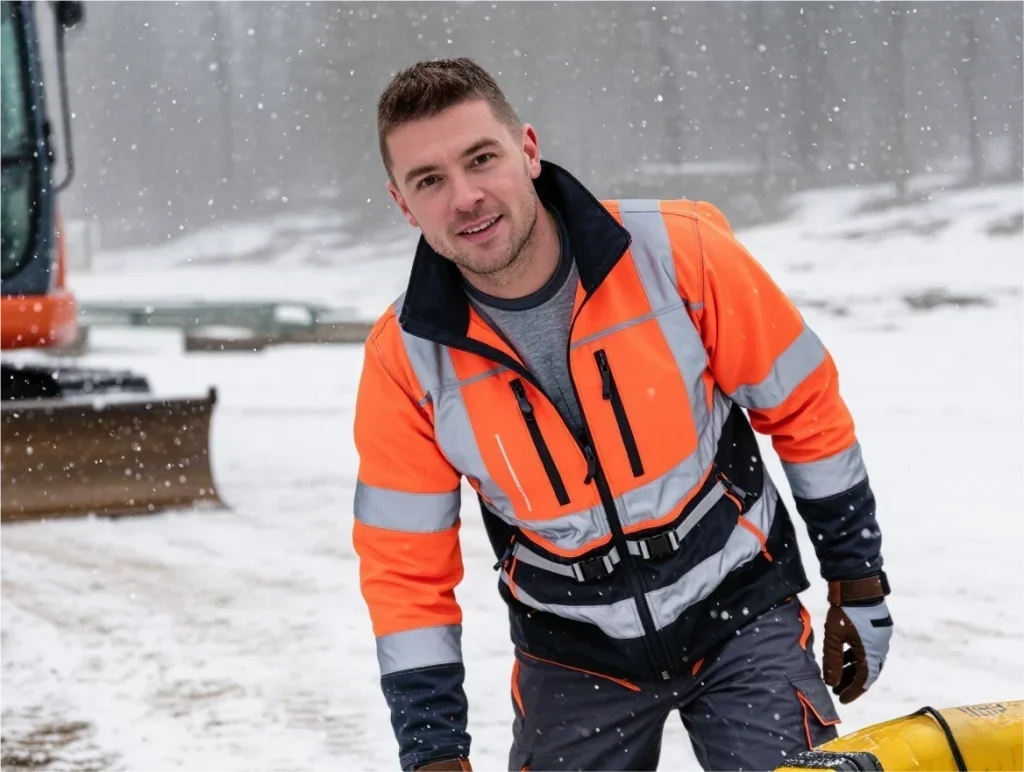
- Enhance low-light, snow, and visibility in the fog.
- Keep the laborer dry in snow/sleet.
- Move freely regardless of heavy insulation.
Winter job sites, particularly construction, industrial, roadside, utility, and traffic control, do not have optional specialized jackets—they are mandatory PPE.
In addition to the Standard Vest: What Makes a Winter Safety Jacket.
A winter safety jacket is constructed with many different systems in it. These include:
- Core Components
- Thermal lining (quilted, fleece or thermal liners)
- Waterproof shell
- Membrane layers that prevent the wind.
- Reinforced stitching
- High-visibility neon color
- Reflective tape complying with ANSI.
- Storm cuffs and sealed seams
These characteristics form a jacket that shields the workers against the cold weather and keeps them safe at the workplace.
Basic characteristics to consider on a cold weather safety jacket.
The following are the characteristics of a good jacket:
- Most Important Features
- Windproof rating, waterproof rating.
- ANSI Class 2 or 3 certification
- Sweat-protective breathable textile.
- Thermal insulation (multi-layer). (multi-layer).
- Heavy-duty zippers
- Reinforced design of the elbow and the shoulder.
- Adjustable cuffs and waistband
- Large utility pockets
- Removable or insulated hood
These will make these shifts comfortable and safe during the long outdoor shifts.
Understanding Insulation Types: From Fleece to Thermal Liners
Different job sites require different insulation levels.
Insulation Comparison Table
| Insulation Type | Description | 最適 |
| Fleece | Soft, breathable, lightweight warmth | Mild winters |
| Quilted Insulation | Layered stitching for balanced heat | General job sites |
| Thermal Liners | Heat-trapping technology, multi-layer | Harsh winter climates |
| Down Alternative | Extreme warmth without bulk | Subzero conditions |
The best winter jackets use a combination of two insulation types for maximum protection.
Waterproof and Windproof Ratings: The Barrier Against the Elements
Winter jackets should protect against the problems of harsh nature.
Waterproof Standards
- 5,000 mm → Light snow
- 10,000 mm → Heavy snow and rainfall
- 15,000 mm + 15,000 mm → Industrial-grade conditions of freezing.
Windproof Features
- Laminated shell
- Wind-blocking storm flaps
- Sealed zippers
- Inner storm skirt
- High neck/chin/chin guard
These layers do not allow cold air to creep into the jacket.
ANSI-compliant thermal protection. -compliant thermal protection.
ANSI visibility standards make sure that workers remain visible in:
- Snow
- Fog
- Night work
- Blizzards
- Traffic zones
ANSI Classes
- Class 2: Class 2: 2 medium visibility requirements.
- Class 3 3 Optimum visibility, best in winter.
Class 3 jackets (winter) are perfect in the construction and roadside.
The visibility of snow and low-light conditions is high.
White light is reflected by snow and decreases the level of color.
Thus, winter jackets should include:
- Fluorescent Lime
- Fluorescent Orange
- 蛍光イエロー
Has 360-degree reflective tape that is 2 inches in width.
Durability and Rugged Conditions Construction.
Winter jackets must handle:
- Daily wear and tear
- Sharp tools
- Rough surfaces
- Rain, ice, and snow
Durability Features
- Ripstop shell fabric
- Reinforced elbows
- Triple-stitched seams
- Industrial-strength zippers
- Abrasion resistance
Convenience and Ease: Bulk avoidance.
The winter jacket must ensure that the workers are warm, and the jacket should not limit them.
- Mobility Enhancers
- Ergonomic sleeves
- Articulated shoulders
- Stretch fabric panels
- Two-way zippers
- Adaptable waist to move flexibly.
Workers would need to lift, climb, bend, and reach without being restricted.
Our Rigorous Review Methodology
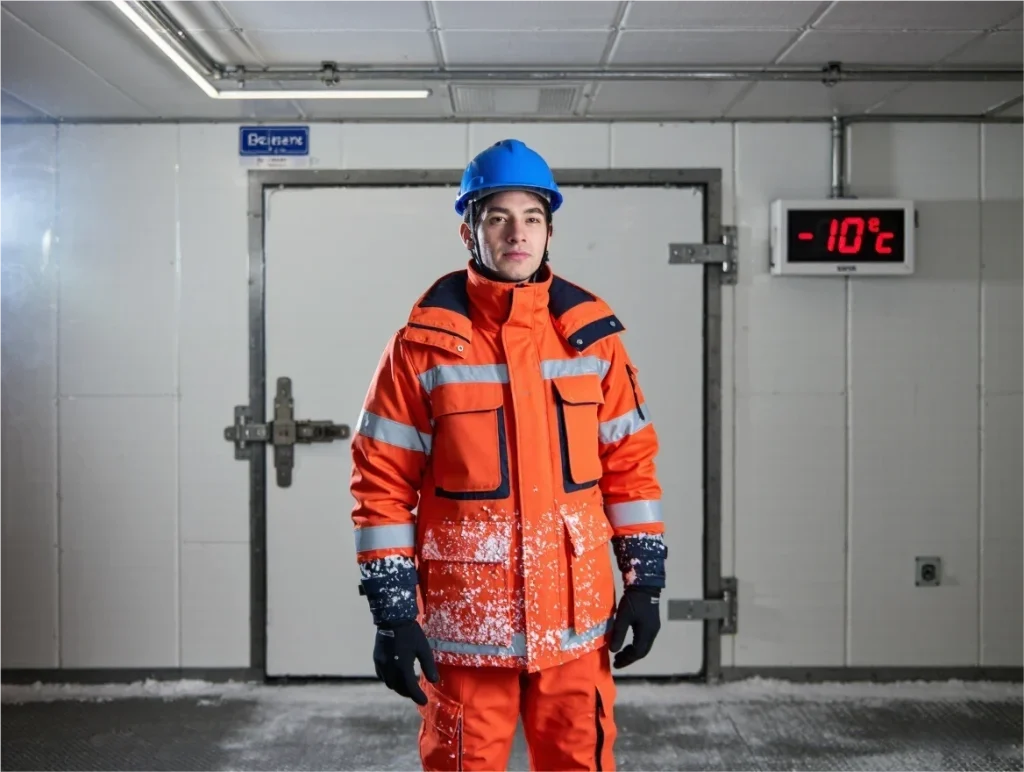
We conducted tests in:
- Wind tunnels
- Freezer simulation rooms
- Outdoor snow environments
- Moisture exposure labs
We tested the actual working conditions performance of:
- Warmth retention
- Visibility range
- Waterproofing
- 耐久性
- Fit & comfort
How We Tried Warmth and Weather Resistance.
We exposed the jackets to:
- –10°C controlled cold chambers
- Heavy wind simulation
- Snow spray nozzles
- Systems of moisture penetration.
Measuring visibility under simulated winter conditions.
Visibility tests included:
- Fog chambers
- Low-light LED simulation
- Headlight reflection on the vehicles.
- Snowfall conditions
Evaluating lastingness, adaptability, and practicality.
We tested:
- Seam strength using pulling machines.
- Pressure-resistant strength of zippers.
- Gloves usability at the pocket level.
- Hood security under wind
Safety Jacket Review n. 1: Industrial Heavy-Duty Performer.
Wind blocking and thermal performance.
- Welded at low temperatures, under -15°C.
- Three layers of insulation = optimum warmth.
Visibility ANSI Verification.
- ANSI Class 3, 2-inch reflective tape, neon lime shell.
Pros & Cons
Pros:
- Extreme warmth
- Maximum visibility
- Long-lasting durability
Cons:
- Slightly heavy
It is a review of a safety jacket #2: called the Agile Utility and Service Jacket.
Warmth + Mobility
Optimal equilibrium between insulation and motion.
Water-Repellent Design
Excellent in the light rain or occasional snow.
Pros & Cons
Pros:
- Very comfortable
- Lightweight
- Great mobility
Cons:
- Not for extreme cold
Safety Jacket Review #3: Insulated Hybrid Commuter Jacket
Urban ANSI Safety
Stylish but work-compliant.
Layer-Friendly Design
Slim fit ideal for layering.
Pros & Cons
Pros:
- Stylish look
- Easy to layer
- Good visibility
Cons:
- Moderate insulation
Economical Essential Jacket: Safety Jacket Review 4.
Budget-Friendly Protection
Good for a mild cold.
Trade-Offs
Minimal waterproofing and lower insulation.
Pros & Cons
Pros:
手頃な価格
Comfortable
Cons:
Inapplicable in severe environments.
Head-to-Head Comparison Table.
Warmth & Protection
| ジャケット | 暖かさ | waterproof | Windproof |
| Heavy Duty | ★★★★★ | ★★★★★ | ★★★★★ |
| Utility | ★★★★☆ | ★★★★☆ | ★★★★☆ |
| Commuter | ★★★☆☆ | ★★★☆☆ | ★★★★☆ |
| Economical | ★★☆☆☆ | ★★☆☆☆ | ★★☆☆☆ |
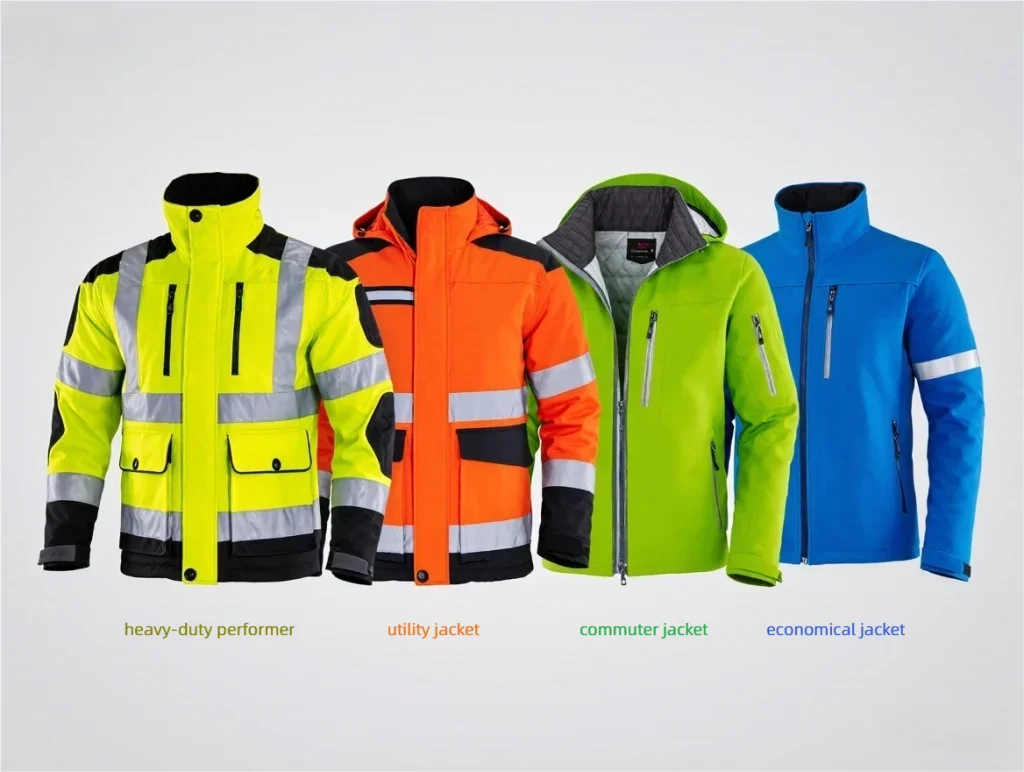
Considerations of Special Interest in the Choice of Your Jacket.
Before buying, consider:
- Climate severity
- Job type
- Shift duration
- Layering habits
- Budget
- Required ANSI class
Significance of correct sizing as compared to base layers.
Consider:
- Thermals
- Hoodies
- Harness use
- Mobility needs
Long-term Winter Performance Care and Maintenance.
- Wash gently.
- Avoid softeners.
- The air is dry.
- Respray waterproof on an annual basis.
Learning about Temperature Ratings.
Ratings are used to show how much they are likely to perform, but true warmth is determined by:
- Wind speed
- Layers worn
- Worker activity
Final Finding: What jacket best suits you?
In the case of extreme cold, a heavy-duty jacket
For mobility → Utility Jacket
To be stylish and safe in winter seasons → Commuter Jacket.
On the budget constraints—→ Economical Jacket.
Summary
Cold Weather Safety Jackets are used to keep the employees out of extreme temperatures, enhance visibility, avoid injuries, and guarantee conformity. The selection of the jackets enhances safety, productivity, and comfort during winter.
Final Verdict
The most suitable jacket to use by most workers is the Heavy-Duty Industrial Safety Jacket.