

反射テープの仕組み:再帰反射ハイビズの科学
真夜中、建設作業員が高速道路のそばに立っている。雨が降っている。トラックが時速90キロで接近し、ヘッドライトが暗闇を切り裂く。運転手は500メートル以上先から作業員を認識し、安全に減速する時間がある。これを可能にしているのは、懐中電灯でも警告灯でもない。安全ジャケットに縫い付けられた細いテープだ。そのテープは 反射テープ ほとんどの人が考えもしない精密な光学機能を果たしており、夜勤の終わりに作業員が安全に帰宅できるかどうかを決める最も重要な要素である。反射テープの仕組みを理解することは、 反射テープの仕組みを理解することは、 安全管理者、購買担当者、高視認性個人保護具に責任を持つすべての人にとって不可欠である。この記事では、再帰反射技術の背後にある科学を説明し、さまざまな ハイビズテープの種類を比較し、反射衣料の選択と保守に関する実用的なガイダンスを提供する。
視認性の物理学:蛍光と再帰反射の説明
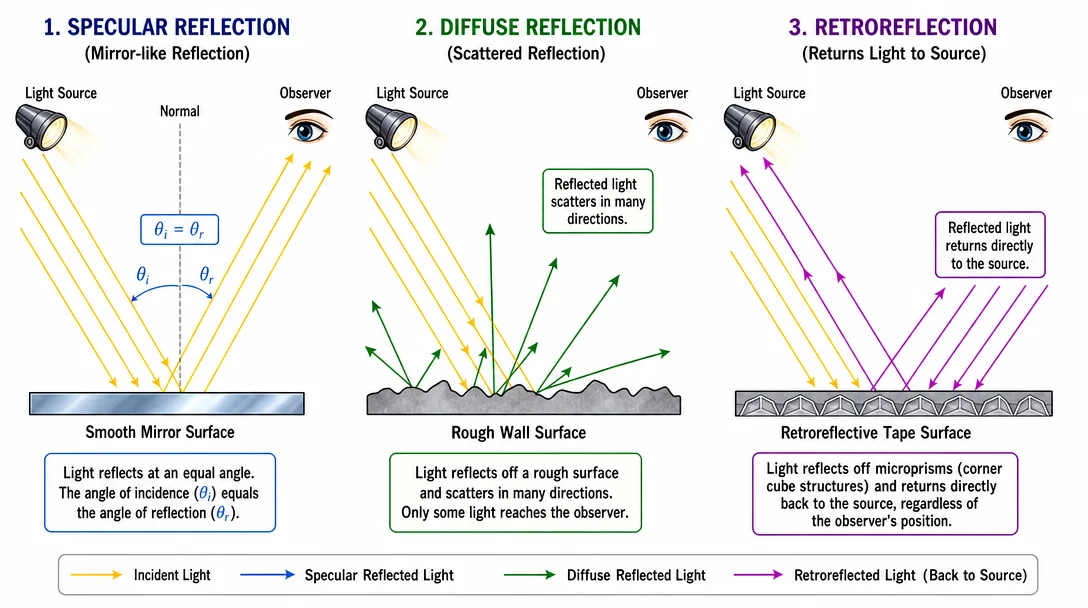
高視認性衣料は、作業員を視認できるようにするために2つの異なる光学メカニズムを使用する。それらは蛍光と再帰反射である。これらは完全に異なる物理原理で動作し、両方が一日中の保護に必要である。再帰反射と蛍光の材料の違いは、 再帰反射と蛍光の 材料の違いは、購買担当者や安全コーディネーターにとって最も一般的な混乱のポイントの1つである。
蛍光の役割
蛍光材料は、太陽からの紫外線(UV)を吸収し、可視光として再放出する。このプロセスにより、蛍光黄色、オレンジ、赤色は、同じ色相の非蛍光バージョンよりも著しく明るく見える。蛍光黄色の衣料は、環境からの黄色光を反射するだけでなく、目に見えないUV放射を追加の黄色光子に変換し、観察者の目に届く可視光を実質的に増やす。
この効果は、日光にUV放射が存在する日中の時間帯にのみ有効である。蛍光は、吸収するUV源がないため、夜間や暗闇では効果がない。ハイビズ衣料の蛍光部分は、銀色や灰色のストリップではなく、色付きの生地自体である。試験データによると、蛍光材料は直射日光の下で従来の色より2〜3倍明るく見えることがあり、日中の検出距離を大幅に改善する。
再帰反射の役割
再帰反射材料は、まったく異なる原理で動作する。それらは光を生成しない。代わりに、車のヘッドライトなどの光源からの入射光を取り、その同じ光源に向けて方向転換する。運転手が反射テープを着用した作業員にヘッドライトを当てると、テープはその光を捕捉し、運転手の目に直接返す。これが、完全な暗闇でもヘッドライトに照らされると着用者が光って見える理由である。
衣料の再帰反射部分は、銀色または灰色のテープストリップである。これらのストリップには、光を曲げる機能を果たす何百万もの微細な光学要素(ガラスビーズまたはマイクロプリズム)が含まれている。再帰反射は、周囲にUV放射が存在しない夜間や低照度条件下で視認性を提供する唯一のメカニズムである。
ハイビズ衣料に両方が必要な理由
蛍光も再帰反射も単独では完全な保護を提供しないことを理解することが重要である。蛍光材料のみの衣料は、夜間にはほとんど見えなくなる。再帰反射テープのみの衣料は、直接光源を向けない限り、日中は見えにくい。両方の技術を組み合わせることで、日中の蛍光による視認性と暗闇での再帰反射による視認性が確保される。この二重アプローチが、EN ISO 20471およびANSI/ISEA 107規格が認証衣料に蛍光背景材と再帰反射テープの両方を要求する理由である。
再帰反射材料が光を光源に戻す仕組み
反射テープの仕組みを理解するには、 反射テープの仕組みを理解することは、、再帰反射自体の光学原理を調べる必要がある。通常の反射では、光は入射角と同じ角度で表面から跳ね返る。懐中電灯を横から鏡に当てると、反射ビームも横にそれる。懐中電灯の隣に立つ人はほとんど何も見えない。これは鏡面反射と呼ばれる。
拡散反射は、ほとんどの日常の表面で起こる。光は壁に当たり、あらゆる方向に散乱する。これが、部屋のどの角度からでも塗られた壁が見える理由である。しかし、拡散反射は光エネルギーを薄く広げるため、距離が離れると、単一の観察者の目に届く光はごくわずかになる。
再帰反射は両方と異なる。光が再帰反射面に当たると、材料内の微細な光学要素が、入射角に関係なく光ビームを元の光源に向けて方向転換する。つまり、車のヘッドライトが作業員の反射テープを照らすと、光は集中され、運転手に直接返される。運転手は明るい信号を見るが、横に立つ人はほとんど見えない。この方向特性が、再帰反射テープを道路安全に非常に効果的にしている理由である。
再帰反射係数は、カンデラ毎ルクス毎平方メートル(cd/lx/m²)で測定され、材料が光源に戻す光の量を定量化する。係数値が高いほど、より遠距離で明るい視認性を意味する。EN ISO 20471(ISO.orgで見る)などの規格は、認証を取得するために反射材料が満たすべき最小係数値を指定している。新しい再帰反射テープは、使用技術に応じて通常250〜500 cd/lx/m²の係数値を達成する。
この光学挙動が、運転手が夜間に数百メートル先から作業員を見ることができる理由である。光は散乱しない。ほぼ同じ経路を戻り、利用可能な光エネルギーを観察者に向けた狭い円錐に集中させる。
ガラスビーズ vs マイクロプリズムテープ:技術比較
内部の再帰反射要素 反射テープ技術 は主に2つのカテゴリーに分類されます。ガラスビーズ技術は1930年代から使用されており、マイクロプリズム技術は後から開発され、異なる性能特性を提供します。バイヤーは、情報に基づいた調達決定を行うために、これら2つのアプローチの違いを理解する必要があります。
ガラスビーズ技術
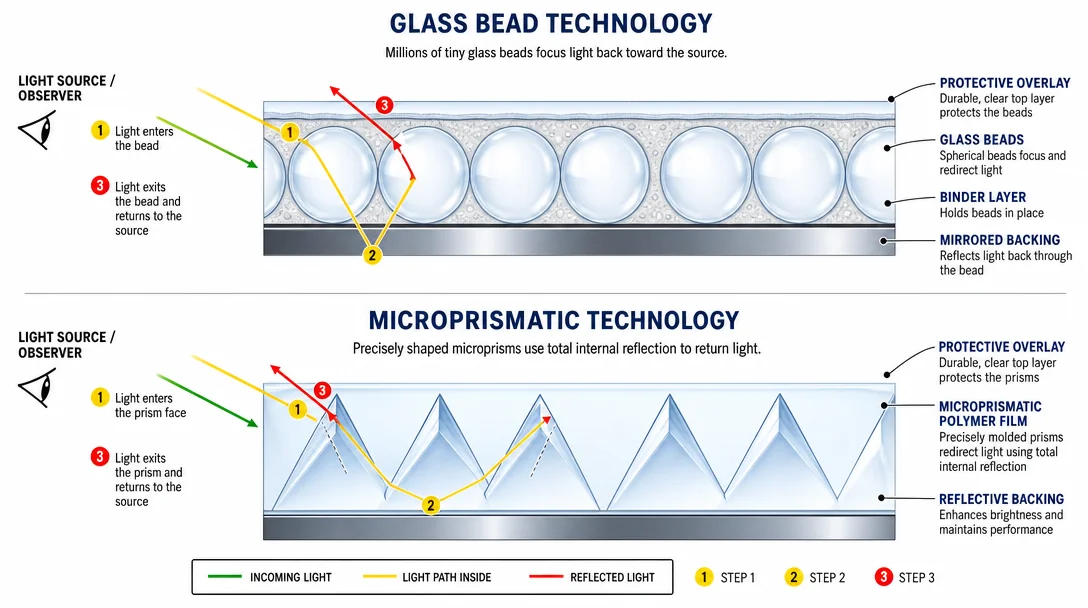
ガラスビーズ反射テープには、テープ表面のバインダー層に埋め込まれた何百万もの微小な球状ガラスビーズが含まれています。光がガラスビーズに入ると、前面を通過し、鏡面裏装層で反射し、再び前面から出て光源に向かって戻ります。ビーズの球形により、広範囲の角度から入射した光でも光源に戻すことができます。
ガラスビーズテープにはいくつかの利点があります。広い角度応答性を持ち、光源が観察者と直接 aligned していなくても視認できます。マイクロプリズムテープよりも製造コストが一般的に低いです。ガラスビーズ技術はよく理解されており、数十年の現場性能データがあります。3M Scotchliteを含む主要ブランドは、多くの製品ラインの基盤としてガラスビーズ技術を使用しています。
しかし、ガラスビーズテープには制限もあります。ビーズは摩耗、洗濯、化学物質曝露によって脱落する可能性があります。ビーズが失われると、テープの再帰反射性能が低下します。ガラスビーズテープは、マイクロプリズム代替品と比較して耐用年数が短い傾向があります。また、屈曲や折り目に対する耐性が低く、バインダー層に亀裂が生じることがあります。
マイクロプリズム技術
マイクロプリズム反射テープは全く異なるアプローチを使用しています。ガラス球の代わりに、ポリマーフィルムに成形された何百万もの正確な形状の微細プリズムを含んでいます。これらのプリズムは全内部反射を利用して、入射光を光源に向けて戻します。光はプリズム面に入り、内部プリズム表面で反射し、別の鏡面裏装を必要とせずに光源に向かって戻ります。
マイクロプリズムテープは、ガラスビーズテープよりも高い初期再帰反射係数を提供します。プレミアムグレードでは係数値が500 cd/lx/m²を超えることがあります。プリズム構造はフィルム材料と一体であるため、ガラスビーズテープのように摩耗によって粒子を脱落させません。マイクロプリズムテープはまた、衣類が折り畳まれたり圧縮されたりしても、より柔軟で亀裂に強いです。繰り返しの洗濯サイクルを通じて性能をより良く維持します。
マイクロプリズムテープの主な欠点はコストです。製造プロセスには、正確な形状のプリズムを生産するための精密工具と制御された条件が必要です。マイクロプリズムテープは汚染にも敏感です。汚れ、油、垢がプリズムの溝を埋め、表面が清掃されるまで再帰反射出力を減少させる可能性があります。
性能比較と標準準拠
ガラスビーズ技術とマイクロプリズム技術の両方が、EN ISO 20471およびANSI/ISEA 107認定衣類に使用されています。標準は特定の技術を義務付けるのではなく、最小再帰反射性能レベルを指定しています。
ガラスビーズ vs マイクロプリズムテープ比較:
| 特徴 | ガラスビーズ | マイクロプリズム |
|---|---|---|
| 初期RA係数 | 250-350 cd/lx/m² | 350-500+ cd/lx/m² |
| 耐久性(摩耗) | 中程度 — ビーズが脱落する可能性 | 高い — 一体型プリズム構造 |
| 耐洗濯性 | 25-50 cycles | 50-100+ cycles |
| Flexibility | Lower — prone to cracking | Higher — resistant to creasing |
| コスト | Lower — cost-sensitive markets | Higher — precision manufacturing |
| Contamination sensitivity | 低 | Moderate — dirt fills prism grooves |
| Best use case | General construction, warehousing | Fire service, railway, industrial wash |
| Lifespan | 12-18 months outdoor | 18-24 months outdoor |
When comparing 3M Scotchlite alternatives, buyers should note that many manufacturers now produce microprismatic tape that meets or exceeds the performance of traditional glass bead products from major branded suppliers. HSafetyJackets sources both glass bead and microprismatic tape options to meet different customer requirements and price points.
関連: クラス3高視認性: 職場の最大限の安全のためのガイド
Tape Width Standards: Why 2 Inches (50mm) Is the Minimum
The minimum width for retroreflective tape on certified high-visibility garments is 50 millimeters, which is approximately 2 inches. This number is not arbitrary. It is based on optical research into the minimum surface area required for a retroreflective signal to be reliably detected by the human eye at standard driving distances.
The Science Behind Minimum Tape Width
Retroreflective tape must present a sufficient projected area to the observer for detection to occur. If the tape is too narrow, the total amount of light returned to the observer falls below the threshold needed for reliable recognition. Research conducted during the development of EN 471, the predecessor to EN ISO 20471, established that 50mm was the minimum width at which retroreflective strips could be consistently detected at distances of 150 to 200 meters under typical nighttime driving conditions.
Tape width also affects the observer’tains ability to recognize the signal as a human figure. Narrow strips may be visible but may not be distinguishable from road markings, signage, or other reflective objects. A 50mm strip provides enough visual mass to be identified as part of a person’tains silhouette, especially when arranged in the standard body-encircling patterns required by the standards.
How Tape Width Affects Detection Distance
Detection distance increases with the total area of retroreflective material. A garment with wider tape or more strips will be visible from a greater distance than one with narrower or fewer strips. EN ISO 20471 Class 3 garments, which provide the highest level of visibility, require a minimum of 150 centimeters of retroreflective tape area compared to only 50 centimeters for Class 1. This difference directly translates to increased detection distance and improved recognition of human form.
ANSI/ISEA 107 follows a similar logic, with Type P (public safety) garments requiring the greatest retroreflective area. The standard specifies minimum widths and total areas for each performance class. It is important to note that reducing tape width below the standard minimum, even by a small amount, can significantly reduce detection distance and may render the garment non-compliant.
ANSI and EN ISO Requirements
EN ISO 20471 requires retroreflective material to be at least 50mm wide, with a maximum of two 25mm strips allowed in parallel with a gap of no more than 50mm between them. ANSI/ISEA 107 similarly specifies 2 inches (50.8mm) as the minimum width for retroreflective strips. Both standards also define the total minimum area of retroreflective material required for each class or type of garment. See our full ANSI vs EN ISO comparison guide for detailed requirements on tape placement, width, and area specifications across both standards.
FAQ: Reflective Tape Questions
How can I tell if my reflective tape is still effective?
Shine a flashlight at the tape from your eye position in a darkened room. Effective tape appears bright and evenly illuminated. Dull, dark, or patchy areas indicate degradation. Also check for physical damage: cracks, peeling edges, missing sections, or color change from silver to grey/yellow.
How many wash cycles can reflective tape withstand?
EN ISO 20471 requires a minimum of 50 industrial wash cycles at 60°C while maintaining certified performance. High-quality microprismatic tape can withstand 100+ cycles. Glass bead tape typically degrades after 25-50 cycles. Always request wash durability data from your supplier.
Is glass bead or microprismatic tape better for hi-vis safety?
Microprismatic tape offers higher initial brightness (350-500+ cd/lx/m² vs 250-350), better durability, and longer wash resistance. Glass bead tape is less expensive and has wider angular response. For demanding environments (railway, fire service, industrial wash), microprismatic is the better choice. For general construction and warehousing, glass bead provides adequate performance at lower cost.
Can I replace reflective tape on an existing garment?
Professional re-taping is possible but may void the garment’tains certification. EN ISO 20471 and ANSI/ISEA 107 certify the complete garment design, including tape placement. If tape is peeling or degraded, it is usually safer and more compliant to replace the entire garment rather than attempt repair.
Tape Placement Patterns: 360-Degree Visibility Requirements
The quality of reflective tape matters, but the placement of that tape on the garment is equally important. A worker can be wearing a garment with premium microprismatic tape and still be nearly invisible from certain angles if the tape is arranged incorrectly. This is why both EN ISO 20471 and ANSI/ISEA 107 specify not just the amount of tape but the pattern in which it must be placed.
Why Tape Placement Matters as Much as Tape Quality
Retroreflective tape only works when light strikes it and returns to the source. If the tape is only on the front of a garment, a worker facing away from oncoming traffic will have no visible signal. Drivers approaching from behind will see only the dark background fabric. This creates a dangerous situation where a worker is protected from one direction but completely exposed from another.
The standards address this by requiring body-encircling patterns that provide visibility from 360 degrees around the wearer. This means the retroreflective material must wrap continuously around the torso and, for higher classes, around the arms and legs as well.
The Body-Encircling Pattern Requirement
EN ISO 20471 specifies that for Class 2 and Class 3 garments, at least one band of retroreflective material must encircle the torso completely. For Class 3 garments, additional bands must encircle the arms and, in the case of coveralls, the legs. These encircling bands ensure that regardless of which direction a light source comes from, it will strike retroreflective material and return a signal to the observer.
The horizontal band around the torso is particularly important because it defines the human silhouette. When a driver sees a horizontal reflective band at the height of a person’tains waist or chest, the brain immediately interprets the signal as a human figure. This pattern recognition happens faster than identifying a person by face or clothing detail, giving the driver more time to react.
How Different Placements Affect Visibility from Different Angles
Vertical strips on the front and back of a garment help define the vertical extent of the human figure and improve recognition at oblique angles. Shoulder strips enhance visibility from above, which is important for workers in environments with elevated machinery or forklift traffic. Arm bands are critical for workers who use hand signals, as the movement of reflective material draws attention more effectively than stationary strips.
Durability Factors: What Makes Reflective Tape Fade or Crack
Reflective tape is exposed to harsh conditions throughout its service life. Understanding the factors that cause degradation helps safety managers establish appropriate replacement schedules and helps buyers select tape that matches their operating environment.
UV Exposure Degradation
Ultraviolet radiation from sunlight is the primary cause of long-term degradation in both the fluorescent background fabric and the retroreflective tape. UV photons break down polymer chains in the binder materials that hold glass beads or prismatic films in place. Over time, this causes the tape to lose adhesion to the garment and the retroreflective elements to loosen and detach.
The fluorescent dye molecules in the background material are also susceptible to photodegradation. As UV exposure accumulates, the fluorescent brightness decreases. Testing under accelerated weathering conditions shows that fluorescent fabrics can lose 20 to 40 percent of their initial brightness after the equivalent of two years of outdoor exposure. EN ISO 20471 includes a color fastness test that requires the fluorescent material to retain a specified minimum brightness after exposure to a defined UV dose.
Abrasion and Mechanical Wear
Workers in construction, logistics, and manufacturing environments frequently brush against rough surfaces, climb through tight spaces, and kneel on abrasive ground. These activities wear down the surface of the reflective tape.
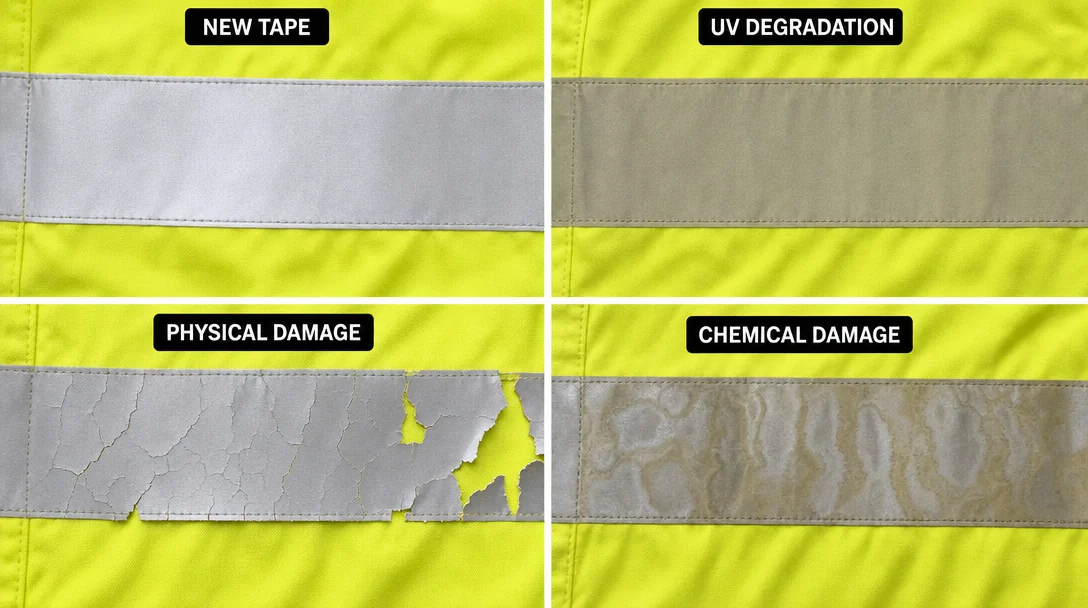
Glass bead tape is particularly vulnerable because the beads can be scraped off the binder layer. Once a significant number of beads are lost, the retroreflective coefficient drops below acceptable levels.
Microprismatic tape resists abrasion better because the prismatic structure is integral to the film material rather than consisting of discrete particles. However, deep scratches and gouges can still damage the prismatic geometry and reduce local retroreflective performance. Tape that is stitched directly to the garment tends to withstand abrasion better than heat-sealed or adhesive-applied tape, which can peel at the edges.
Chemical Exposure
Oils, solvents, fuels, and cleaning chemicals can degrade the adhesive layers and binder materials in reflective tape. Workers in automotive, petrochemical, and industrial maintenance settings may have tape exposed to hydrocarbon splashes on a regular basis. Some solvents can soften the polymer binder, causing beads or prismatic elements to shift or detach. It is important to verify that the tape specification includes resistance to the chemicals present in the work environment.
Temperature Extremes
Reflective tape must maintain performance across the temperature range encountered during use and storage. In hot climates, the adhesive layers can soften and creep, causing tape edges to lift. In cold climates, the binder materials can become brittle and crack when the garment is flexed. EN ISO 20471 includes a heat resistance test and a cold flexibility test to ensure that certified materials can withstand typical operating conditions.
Washing Impact on Reflectivity: How Many Cycles Before Performance Drops
Reflective garments must be laundered regularly to remove dirt, sweat, and contaminants that can reduce visibility. However, the washing process itself can degrade retroreflective performance. The relationship between washing and tape durability is a critical consideration for procurement and maintenance planning.
EN ISO 20471 Washing Test Requirements
EN ISO 20471 requires that certified garments maintain their retroreflective and fluorescent performance after a minimum of 50 industrial washing cycles at 60 degrees Celsius. This requirement ensures that the garment provides adequate protection throughout a reasonable service life under normal laundering conditions. The standard also specifies that the dimensional change after washing must not exceed 3 percent in either direction, ensuring that tape placement remains correct after repeated laundering.
For garments intended for environments requiring more rigorous cleaning, some manufacturers test their materials to withstand 100 or more washing cycles. This information should be verified with the manufacturer before purchasing, as the standard minimum of 50 cycles may not be sufficient for all use cases.
What Happens to Tape After Repeated Washing
During washing, garments are subjected to mechanical agitation, elevated temperatures, and chemical detergents. These factors combine to stress the retroreflective tape in multiple ways. The mechanical action can abrade the tape surface and weaken the adhesive bond to the garment fabric. Elevated temperatures can soften adhesives and cause dimensional changes in the tape material. Detergents, particularly those containing bleach or optical brighteners, can chemically attack the fluorescent dyes in the background fabric and the polymer binders in the tape.
After repeated washing, the most common failures are edge lifting, where the tape begins to peel away from the garment; surface dulling, where the retroreflective coefficient decreases due to surface contamination and minor damage; and color fading in the fluorescent background material. Regular inspection of laundered garments is necessary to identify these failures before the garment falls below acceptable performance levels.
Industrial vs Home Washing Differences
Industrial laundering uses higher temperatures, stronger detergents, and more aggressive mechanical action than home washing. Garments washed in industrial facilities will experience faster degradation than those washed at home. However, industrial washing also provides more consistent and thorough cleaning, which can actually extend the functional life of the tape by removing contaminants that would otherwise cause degradation during wear.
Safety managers should specify the expected washing regime when ordering reflective garments so that the manufacturer can recommend appropriate tape and construction methods. For operations that use industrial laundering exclusively, garments with microprismatic tape and reinforced stitching will typically outlast those with glass bead tape and adhesive application.
関連: The Evolution of Reflective Safety Jackets: Industry News and Trends
Emerging Technologies: LED-Enhanced and Smart Reflective Materials
The field of high-visibility materials continues to evolve. Researchers and manufacturers are developing new technologies that combine traditional retroreflection with active illumination and smart sensing capabilities. These innovations promise to extend the protection offered by conventional hi-vis garments.
Active Illumination with LED Strips
LED-enhanced safety garments integrate small, battery-powered light-emitting diodes into or alongside the reflective tape. These LEDs provide active illumination that is visible even without an external light source, addressing the limitation of passive retroreflective materials. Active illumination is particularly valuable in environments where vehicle headlights may not reach the worker, such as confined spaces, warehouse interiors, or areas with poor lighting.
LED strips can be configured to flash, pulse, or remain steady. Flashing modes draw attention more effectively than steady illumination because the human visual system is highly sensitive to changes in light intensity. Some products combine flashing LEDs with standard retroreflective tape to provide both active and passive visibility in a single garment.
Solar-Powered Reflective Elements
Solar-powered hi-vis elements integrate small photovoltaic cells into the garment to charge batteries during daylight hours. These batteries then power LEDs during darkness. This approach eliminates the need for battery replacement or recharging through external power sources, making it practical for workers who spend significant time outdoors during the day and need visibility at dawn, dusk, or night.
Solar-powered systems are still emerging and are not yet widely specified in standards. However, as the technology matures and costs decrease, it is likely to become a supplementary option for workers in environments where maximum visibility is critical.
The Future of Reflective Technology
Research is underway on electroluminescent materials that can be woven directly into fabric, creating garments that glow uniformly rather than displaying discrete strips of tape or LEDs. Other areas of investigation include photochromic materials that automatically adjust their brightness based on ambient light levels and materials that incorporate radio-frequency identification tags for worker tracking and safety monitoring.
It should be understood that while these technologies are promising, retroreflective tape remains the proven, standard-compliant foundation of high-visibility protection. Emerging technologies should supplement, not replace, the retroreflective and fluorescent elements required by EN ISO 20471 and ANSI/ISEA 107.
How to Test if Your Reflective Tape Is Still Effective
Regular testing of reflective garments ensures that workers are protected and that garments are replaced before performance falls below acceptable levels. Both simple visual methods and professional testing approaches should be part of a comprehensive maintenance program.
Simple Visual Inspection Methods
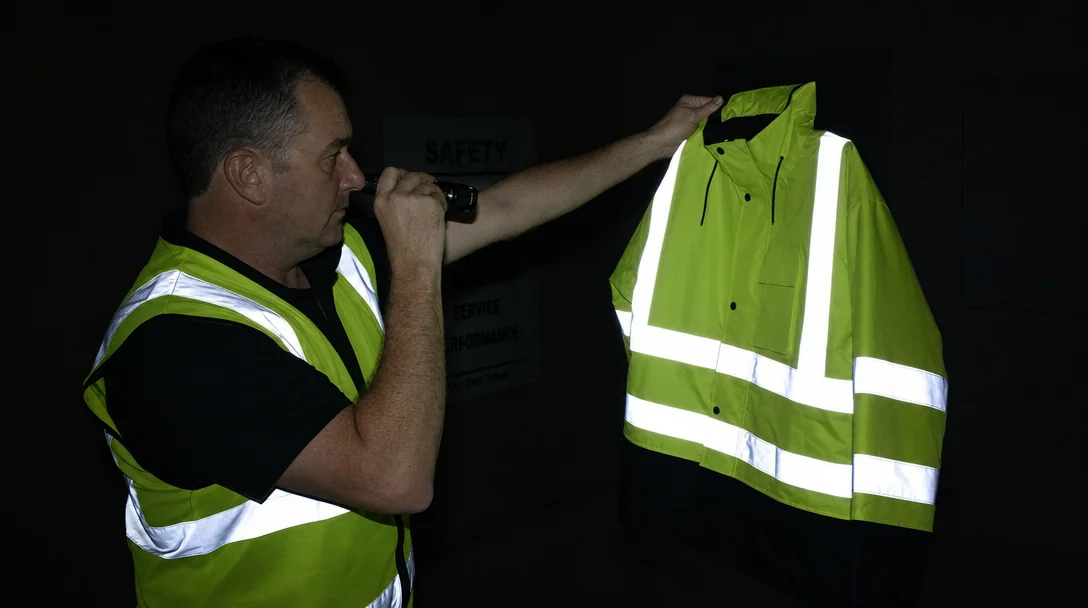
The most basic inspection method is to examine the tape under direct illumination in a darkened room. Hold the garment at arm’tains length and shine a flashlight or vehicle headlight at it from the position of your eyes. The tape should appear bright and evenly illuminated. Areas that appear dull, dark, or patchy indicate degradation of the retroreflective material.
Visually inspect the tape surface for physical damage. Look for cracks, peeling edges, missing sections, and discoloration. Tape that is lifting at the edges is likely to continue peeling and should be replaced. Tape with visible cracks has lost structural integrity and will not perform reliably. Tape that has turned grey or yellow instead of its original bright silver or white has degraded chemically and should be removed from service.
Also inspect the fluorescent background fabric. Hold the garment in direct sunlight and compare its brightness to a new garment of the same color. Significant fading indicates that the fluorescent material has degraded and the garment may no longer meet the daytime visibility requirements of the applicable standard.
Professional Testing Methods
For organizations that need documented proof of compliance, professional testing laboratories can measure the retroreflective coefficient of tape samples using a retroreflectometer. This instrument measures the amount of light returned to the source at specified observation and entrance angles and provides a numerical coefficient value that can be compared against the minimum values specified in EN ISO 20471 or ANSI/ISEA 107.
Color measurement using a spectrophotometer can quantify the luminance factor and chromaticity coordinates of the fluorescent background material. This provides objective data on whether the fabric still meets the color requirements of the standard.
When to Replace Garments
Garments should be replaced when the retroreflective coefficient falls below the minimum values specified in the applicable standard, when the fluorescent background material fades below the required luminance factor, or when physical damage such as tears, holes, or tape detachment compromises the garment’tains structure. As a general rule, most reflective garments in regular outdoor use should be replaced after 12 to 24 months of service, depending on the intensity of use and the frequency of washing. Garments used in harsh environments or washed frequently may need replacement sooner.
What Buyers Should Ask Manufacturers About Tape Specifications
Purchasing high-visibility garments in bulk requires attention to the specifications of the reflective tape itself. The tape is the component that determines compliance, durability, and ultimately worker safety. Buyers should request detailed information from manufacturers before placing orders.
Key Questions About Tape Type, Certification, and Durability
When evaluating suppliers, ask the following questions:
-
What type of retroreflective tape is used? Specify whether it is glass bead or microprismatic technology, and request the manufacturer or brand name of the tape.
-
What certification does the tape hold? Verify that the tape meets the retroreflective performance requirements of EN ISO 20471, ANSI/ISEA 107, or other applicable standards. Request test reports from an accredited laboratory.
-
What is the initial retroreflective coefficient? The coefficient value in cd/lx/m² should be documented and should exceed the minimum requirements of the applicable standard.
-
How many washing cycles has the tape been tested to? Confirm whether the tape has been tested to 50 cycles at minimum, and request data for 100+ cycles if industrial laundering is expected.
-
What is the temperature range for safe use? Verify that the tape is rated for the climate conditions where the garments will be worn.
-
Is the tape resistant to specific chemicals present in the work environment? Request chemical resistance data if workers will be exposed to oils, solvents, or other substances.
-
How is the tape attached to the garment? Stitched tape generally outlasts heat-sealed or adhesive-applied tape, particularly in environments with frequent washing or abrasion.
HSafetyJackets’tain Tape Specifications
HSafetyJackets sources reflective tape from verified suppliers and provides full documentation of tape specifications, test reports, and compliance certificates with every order. Both glass bead and microprismatic options are available, and for organizations requiring garments that exceed standard minimums, we can produce garments tested to 100+ washing cycles with enhanced UV resistance. Custom tape widths, colors, and placement patterns are available to meet specific project needs.
Contact us for wholesale orders of reflective safety garments with certified tape specifications that meet your project requirements. Reach out to HSafetyJackets for custom solutions tailored to your industry, climate, and compliance needs.