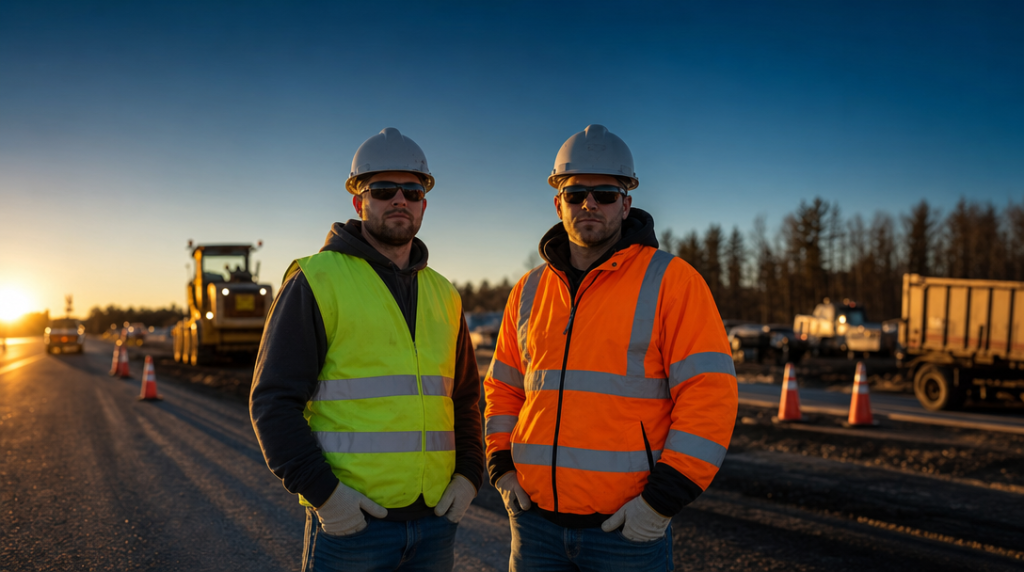
チームが車両、設備、または薄暗い環境の近くで作業する場合、次のどちらを選ぶかが重要です ANSI クラス2とクラス3 高視認性安全ジャケットは、コンプライアンスと作業者の安全の両面で重要です。誤ったクラスを選ぶと、危険に対して視認性が不足する可能性がある一方、作業現場が実際に必要とする以上の性能を持つ衣料に不必要なコストをかけることにもなります。
世界中のB2Bバイヤーに供給してきた約20年の経験を持つ安全ジャケットメーカーとして、私たちは調達チーム、安全管理者、請負業者がまさにこの判断に悩む場面を日常的に見ています。本ガイドでは、次の違いを分解して説明します ANSI クラス2とクラス3の安全ベストおよびジャケット を平易な言葉で、比較表、用途別の推奨事項、コンプライアンス上の考慮事項とともに解説します。これにより、初回の発注でチームに適した衣料を指定できます。
認証済み安全ジャケットを見る ANSIとEN ISOの両規格に適合する衣料をご確認ください。
ANSI/ISEA 107の視認性クラスの説明
その ANSI/ISEA 107-2020 規格は、International Safety Equipment Associationが発行しており、米国における高視認性安全服の性能要件を定義しています。蛍光背景素材の量、再帰反射テープの配置と面積、各性能クラスを達成する衣料タイプを対象としています。
この規格では3つの視認性クラスを定義しています:
- クラス1 — 最低視認性レベル。背景素材と反射テープは最小限です。通常、作業者が低速の交通から十分に離れている環境で使用されます。例:駐車場係員、歩道保守、倉庫のピッキングエリア。
- クラス2 — 中間視認性レベル。背景素材と反射テープがクラス1より大幅に多くなります。車両交通の近くで作業する場合、または雨、霧、夕暮れなど視認性が低下する条件での使用を想定しています。一般作業服で最も一般的に指定されるクラスです。
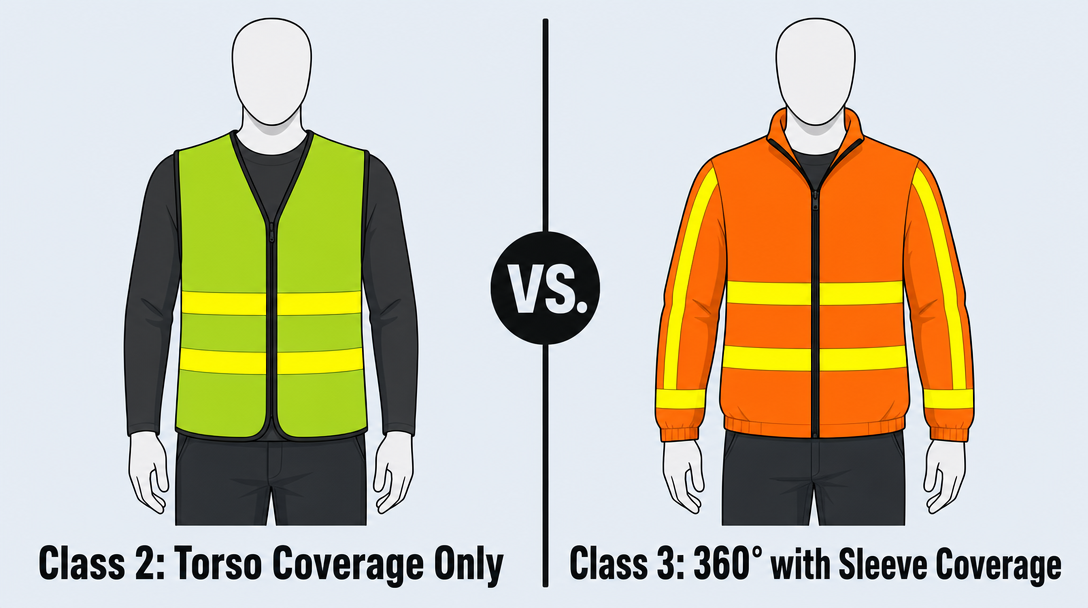
- クラス3 — 最高視認性レベル。背景素材の最大カバレッジと反射テープ面積を備え、360度の視認性のために袖または脚部もカバーします。交通量の多い道路、複雑な背景、低照度または夜間条件など、高リスク環境を対象としています。
B2B調達チームにとって、クラス2かクラス3かの判断が最も一般的な仕様上のポイントであり、コンプライアンスと予算の両方に最も大きな影響を与えます。
クラス2 vs クラス3 — クイック比較表
以下の表は、ANSIクラス2とクラス3の安全衣料の主な違いをまとめたものです。詳細な用途別ガイダンスを読む前のクイックリファレンスとしてご利用ください。
| 特徴 | ANSI クラス2 | ANSI クラス3 |
|---|---|---|
| 最小背景素材量(ANSI/ISEA 107-2020で一般的に参照) | 約775平方インチ(0.50 m²) | 約1,240平方インチ(0.80 m²) |
| 最小反射テープ面積(ANSI/ISEA 107-2020で一般的に参照) | 約201平方インチ(0.13 m²) | 約310平方インチ(0.20 m²) |
| テープ配置 | 胴体を囲む配置 | 胴体+袖または脚部(360°) |
| 一般的な衣類の種類 | ベスト、半袖シャツ | ジャケット、つなぎ服、長袖シャツ |
| 一般的な使用例 | 倉庫、駐車場、測量、空港 | 道路工事、建設、緊急サービス |
| 交通暴露の状況 | 低速、交通から十分に分離 | 高速、稼働中の道路への暴露 |
| 夜間/低照度への適合性 | 中程度 | 最大 |
| 相対コスト | より低い | より高い(素材が多い、カバレッジが広い) |
認証済みの高視認性作業服をお探しですか?
クラス2安全ベストを購入し、業界要件を比較するか、カスタムロゴや卸売注文の一括見積もりをリクエストしてください。
ANSIクラス2を選ぶべき時
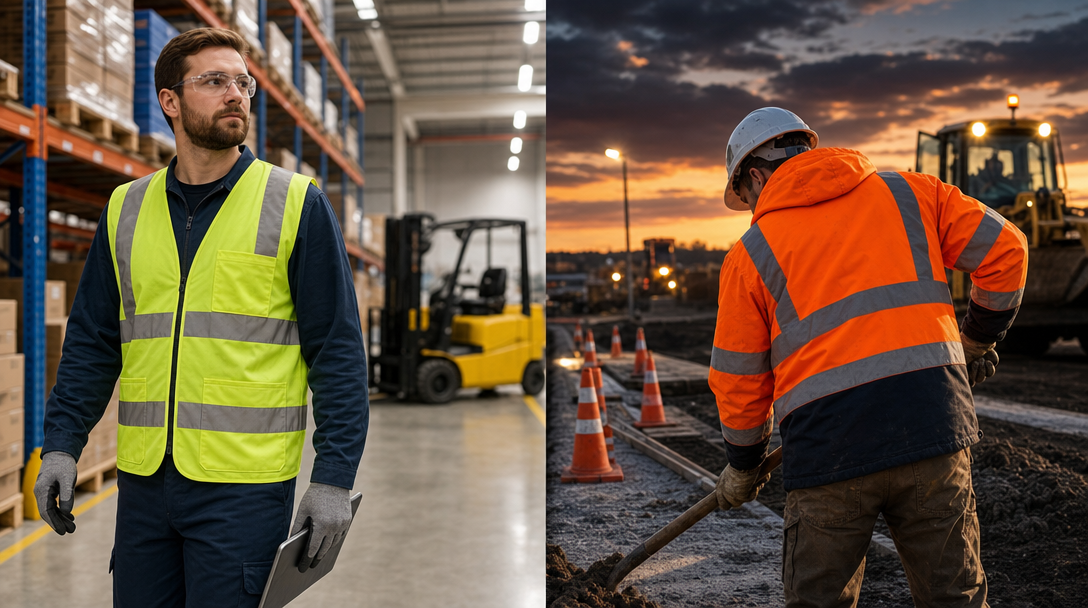
ANSI クラス2 安全衣服は、見られる必要があるものの最高リスク環境にはいない作業者に確実な視認性を提供します。作業者が中程度の速度で移動する車両の周囲にいる場合、または視界条件が概ね良好で、曇天や薄明などの時折の課題がある場合は、通常クラス2が適切な仕様です。
クラス2の最適な使用例
- 倉庫および物流業務 — フォークリフトの往来、荷積み場、車両速度は低速ながら視認性が重要な流通センター向け。 倉庫の安全対策ソリューションを見る.
- 空港のグランドクルー — 誘導路上の作業員、手荷物取扱員、滑走中の航空機や地上車両の近くで作業するグランドサポートチーム向け。
- 測量チーム — 路肩や開けた現場で長時間屋外作業を行う測量士に、中程度の視認性が必要な場合に。
- 学校の交通指導員およびイベントスタッフ — 車両の進入が管理されたエリアで歩行者を誘導する作業員向け。
- 駐車場係員および料金所オペレーター — 低速車両環境で、見えることが重要でありながらリスクが中程度の現場に。
推奨クラス2ウェア
- メッシュ安全ベスト — 軽量で通気性に優れ、暖かい気候や屋内使用にコスト効率の良い選択肢。予算を重視する大量発注に最適。
- 半袖ハイビジナビティシャツ — ベストより広い被覆範囲で、コンプライアンスを維持しながらよりプロフェッショナルな見た目が必要なチームに適しています。
- ツートーン安全ベスト — 下部の暗色パネルでコントラストを強化し、汚れが目立ちにくい — ほこりや泥のある作業現場に実用的。
クラス2安全ベストを購入 ANSI準拠オプションのラインナップを見る。
クラス2の制約
クラス2ウェアは腕や袖を覆わないため、複雑な視覚環境では作業員の側面や背面からの視認性が低下します。また、 適していません 高速交通帯や、背景が視覚的に煩雑になる条件での作業 — 複数の作業が重なる繁忙な建設現場など — には適していません。
ANSIクラス3を選ぶべき時
ANSI クラス3 はANSI/ISEA 107規格における最高視認性クラスです。これらのウェアはクラス2より多くの蛍光背景素材と反射テープを使用し、さらに重要なことに、 袖や脚部への反射材の被覆が必要です。この360度の視認性により、作業員の人体の形があらゆる角度から認識可能になります — 高リスク環境における大きな安全上の利点です。
クラス3の最適な用途
- 道路建設および土木工事 — 高速車両への曝露がある走行車線付近の作業員向け。多くの道路作業ゾーンでは、曝露、作業内容、地域のDOT要件に応じてクラス2またはクラス3の高視認性ウェアが参照されます。 道路・交通安全ソリューションを見る.
- 交通整理・旗振りチーム — 走行車両を誘導したり接触したりする作業員で、最大限の視認性が求められる方々。
- 緊急対応者およびレッカー車オペレーター — 予測困難な高速環境で活動する救急隊員、公共設備チーム、ロードサイドアシスタンスチーム。 業界別安全ソリューションを見る.
- 鉄道保守チーム — 鉄道作業員は高速列車や複雑な信号環境により、特有の視認性課題に直面します。 鉄道安全要件を見る.
- 夜間作業および低視認条件 — 周囲の光量低下、悪天候、複雑な視覚背景により最高レベルの視認性が求められるあらゆる作業現場。
推奨クラス3衣服
- 防水反射ジャケット — 雨の中で作業する屋外チームに必須。シームテープ加工と防水ファスナーが作業員を濡らさず、クラス3の視認性を維持します。
- 高視認性ソフトシェルジャケット — 防風アウターとフリース裏地を備えた寒冷地用ワークウェア。冬季の建設や設備保守に最適。
- 難燃性安全ジャケット — 石油・ガスチームや溶接サポートチームなど、高視認性と難燃性の両方を必要とする作業員向け。
- ツートーン反射ワークウェア — 耐久性を高めたプロフェッショナルな外観。下部の濃色パネルが汚れた現場での汚れを防ぎます。
クラス3反射ジャケットを購入 で全ラインナップをご覧ください。
クラス3の特長
クラス3の主な特長は、 360度の視認性 provided by sleeve or arm coverage. When a worker turns, reaches, or gestures, the reflective tape on the sleeves creates a recognizable human silhouette — something a torso-only vest cannot achieve. This is particularly important in environments where drivers or equipment operators need to identify a person (versus a static object) from a distance.
Class 3 garments also typically offer better weather protection since they are designed as jackets or coveralls rather than vests. This means your team gets both visibility and environmental protection in a single garment.
When to Wear Class 2 vs Class 3: A Quick Decision Guide
If you are still unsure which class your team needs, walk through this decision tree:
- Are workers exposed to higher-speed roadway traffic?
- Yes → Class 3. High-speed traffic requires maximum conspicuity with sleeve coverage.
- No → Continue to question 2.
- Is work conducted in low-light, nighttime, or adverse weather conditions?
- Yes → Class 3. Reduced visibility demands the additional reflective material and 360-degree coverage.
- No → Continue to question 3.
- Is the worksite visually complex — multiple activities, equipment, or vehicles operating simultaneously?
- Yes → Class 3. Complex backgrounds make it harder for operators to distinguish workers; sleeve coverage helps.
- No → Continue to question 4.
- Are workers near vehicles or equipment moving at low speeds in well-lit conditions?
- Yes → Class 2 is typically sufficient. Warehouses, airports, and surveying sites commonly fall into this category.
- No → Class 1 may be adequate, but verify your jurisdiction’tains minimum requirement.
Rule of thumb: When in doubt, specify Class 3. It always exceeds Class 2 requirements, and the incremental cost is usually small compared to the safety benefit. For teams sourcing garments through wholesale or bulk orders, the per-unit price difference between Class 2 and Class 3 becomes even more manageable at scale.
ANSI vs EN ISO 20471 — A Note for International Buyers
If your supply chain spans multiple regions, you may also encounter the EN ISO 20471 standard, which is the European standard for high-visibility clothing. EN ISO 20471 also defines Class 1, 2, and 3 levels with comparable visibility requirements — Class 3 under EN ISO 20471 requires approximately 0.80 m² of fluorescent material and approximately 0.20 m² of retroreflective material, which is broadly similar to ANSI Class 3.
However, ANSI/ISEA 107 and EN ISO 20471 are not identical standards. They differ in testing methods, wash-cycle requirements, labeling formats, and the way garment types are classified. A garment that meets ANSI Class 3 does not automatically carry EN ISO 20471 certification — and vice versa. For buyers sourcing for international projects, it is important to verify which standard (or both) the end market requires.
Many manufacturers, including HSafetyJackets, produce garments that are tested and certified to both ANSI/ISEA 107 and EN ISO 20471 standards. View our certification comparison guide for an overview of the key differences and what to ask your supplier.
Common Compliance Mistakes to Avoid
Through our experience supplying safety workwear to buyers globally, we see a few recurring specification errors:
- Ordering Class 2 for road work — Many buyers default to Class 2 vests for road crews because they are cheaper. However, many roadway work zones reference Class 2 or Class 3 high-visibility garments depending on exposure, task, and local DOT requirements. Always verify the local jurisdiction’tains requirement before ordering.
- Assuming a vest can achieve Class 3 — ANSI Class 3 requires sleeve or leg coverage. A vest alone — even one with extensive reflective tape — cannot meet Class 3 requirements. Workers need a jacket, coverall, or long-sleeve shirt to achieve Class 3 compliance.
- Ignoring dual-standard requirements — International supply chains often need garments that meet both ANSI/ISEA 107 and EN ISO 20471. Check our certification guide for an overview of the major standards and how they compare.
- Not planning for seasonal variation — A Class 2 mesh vest may be perfect in summer but inadequate when weather conditions change. Consider whether your team needs a seasonal garment plan or a single Class 3 jacket that covers all conditions.
How to Order the Right Class for Your Team
Selecting the correct visibility class is a straightforward process once you have the right information. Here is a practical workflow for procurement teams:
Step 1: Assess worksite risk. Identify the vehicle speeds, traffic patterns, lighting conditions, and visual complexity of the worksite. Higher-speed roadway traffic and nighttime conditions point to Class 3. Low-speed, well-lit environments typically allow Class 2.
Step 2: Check local and state regulations. Many jurisdictions have specific requirements that go beyond the ANSI baseline. State DOTs, municipal procurement policies, and client-specific specifications can all mandate a minimum class. When in doubt, specify Class 3 — it always exceeds Class 2 requirements.
Step 3: Define quantity, sizes, and branding needs. Determine team size, size distribution, and whether you need custom logo printing or embroidery. Explore our OEM customization options for logo placement, color matching, and packaging.
Step 4: Request samples and quotes. Before committing to a bulk order, request physical samples to verify fit, material quality, and print quality. Contact our team with your worksite details and we will recommend the right ANSI class and garment type, with competitive wholesale pricing.
Frequently Asked Questions
Can I wear Class 3 instead of Class 2?
Yes — Class 3 exceeds Class 2 requirements, so wearing a Class 3 garment in a Class 2 environment is always compliant. However, Class 3 garments are typically heavier and more expensive. For indoor warehouses or low-risk environments, a Class 2 vest may be more comfortable and cost-effective. Consider upgrading to Class 3 if your worksite conditions may change to higher-risk scenarios.
Is ANSI Class 3 required for road work?
Many roadway work zones reference Class 2 or Class 3 high-visibility garments depending on exposure, task, and local DOT requirements. For higher-speed traffic control and low-light conditions, Class 3 is commonly specified. Always verify your jurisdiction’tains current requirements, as state-level specifications can be stricter than the federal baseline.
Which ANSI class do warehouse workers need?
Class 2 is typically sufficient for indoor warehouse and logistics environments with low-speed vehicle traffic. Warehouse hi-vis requirements are typically determined through employer and site risk assessment, customer requirements, and applicable local rules. For outdoor yard operations with faster-moving vehicles, Class 3 may be more appropriate.
What is the difference in reflective tape requirements?
Class 2 requires approximately 201 square inches (0.13 m²) of retroreflective tape, commonly referenced under ANSI/ISEA 107-2020, typically arranged in horizontal bands around the torso. Class 3 requires approximately 310 square inches (0.20 m²) and must include reflective material on the sleeves or arms to provide 360-degree visibility. The additional tape area and sleeve coverage are what make Class 3 garments significantly more visible from all angles.
Does EN ISO 20471 have similar classes?
Yes — EN ISO 20471, the European standard for high-visibility clothing, also defines Class 1, 2, and 3 with comparable visibility levels. Class 3 under EN ISO 20471 is the highest level, requiring approximately 0.80 m² of fluorescent material and approximately 0.20 m² of retroreflective material. The material area requirements are broadly similar to ANSI Class 3, though the testing methods, labeling requirements, and wash-test protocols differ. Many manufacturers, including HSafetyJackets, produce garments that meet both standards. View our certification comparison guide for details.
Can a vest be ANSI Class 3?
No. ANSI Class 3 requires reflective coverage on the sleeves or legs. A vest — by definition a sleeveless garment — can only achieve Class 2. To reach Class 3, workers need a jacket with reflective sleeves, a coverall, or a long-sleeve shirt that meets the minimum material and tape area requirements. If your buyer or spec calls for 「Class 3 vest,」 clarify that the requirement is for a Class 3 jacket or shirt, not a vest.
What is the price difference between Class 2 and Class 3 safety jackets?
Class 3 garments generally cost more than Class 2 because they use more fluorescent fabric, more reflective tape, and often include additional features like waterproof zippers or full-length sleeves. The exact price difference varies depending on the fabric type, brand, order quantity, and any custom printing or embroidery. For bulk and wholesale orders, the per-unit gap narrows significantly. Request a quote with your team size and specification to get accurate pricing for your specific requirements.
Source Certified Class 2 & Class 3 Safety Jackets
This guide provides general information about ANSI/ISEA 107 visibility classes and common roadway guidance. It is not a substitute for official regulatory advice. Always verify applicable requirements with your local jurisdiction, state DOT, or qualified safety professional.
Whether your team needs Class 2 safety vests for warehouse operations or Class 3 reflective jackets for road construction, HSafetyJackets offers a full range of ANSI/ISEA 107 and EN ISO 20471 certified garments. We supply safety workwear to buyers in over 60 countries, with custom logo printing, competitive bulk pricing, and documented certification for every order.
Share your team size, worksite conditions, and compliance requirements. We will recommend the right hi-vis class and provide a detailed quote within 24 hours.