鉄道作業員向け高視認性ウェア:EN 17353、RIS-3279-TOM、および完全ガイド
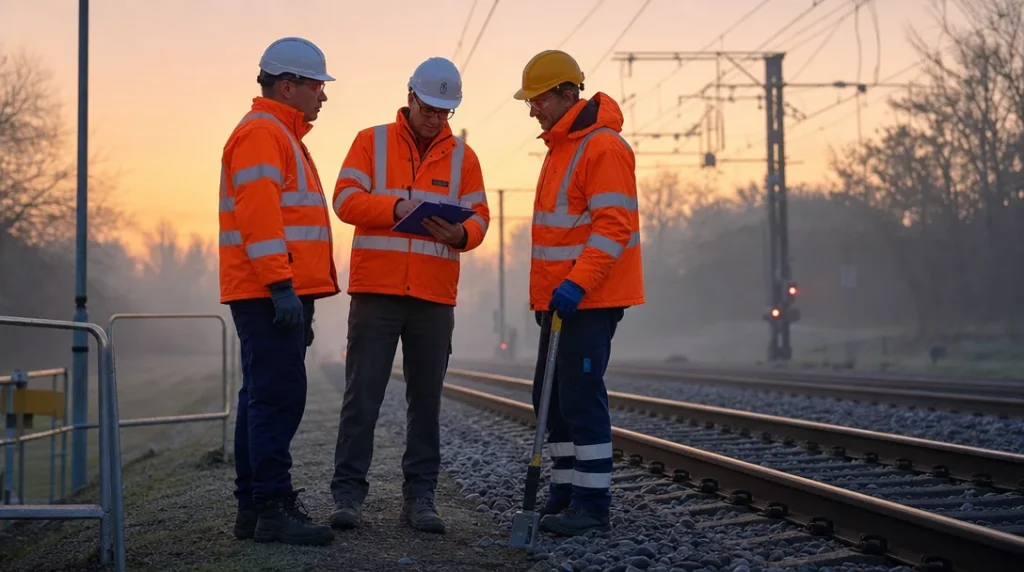
鉄道作業員は、あらゆる業種の中でも最も厳しい視認性の課題に直面しています。固定軌道上を高速で走行する列車の前では、高視認性保護の一瞬の怠りが壊滅的な結果を招く可能性があります。だからこそ、 鉄道作業員向け高視認性ウェア は、一般的な建設や道路工事の環境よりも厳しい基準の下で運用されています。走行する列車、薄暗いトンネル環境、複雑な軌道環境が組み合わさるため、鉄道用安全作業服は基本的な視認性ウェアをはるかに超える特定の認証要件を満たす必要があります。この包括的なガイドでは、次のことについてすべて解説します: RIS-3279-TOM準拠, EN 17353高視認性 基準、および適合した 鉄道作業員向け高視認性 作業服を従業員のためにどのように調達するか。
鉄道の高視認性要件が一般建設より厳しい理由
鉄道環境には、一般的な建設現場や道路工事には存在しない特有の危険があります。こうした違いを理解することは、鉄道作業員向けの安全作業服の調達に責任を持つ人にとって不可欠です。
列車の速度と制動距離
列車は素早く止まれません。時速60マイルで走行する貨物列車が緊急制動条件下で完全に停止するには1マイル以上を要します。駅への進入時に減速して走行する旅客列車でも、停止するには数百メートルが必要です。つまり、列車の運転士は軌道上またはその付近の作業員をかなりの距離から識別しなければなりません。建設現場で許容される標準的な視認性ウェアでは、鉄道環境に十分な検出範囲を提供できません。
鉄道準拠の高視認性ウェアの再帰反射テープは、300メートルを超える距離から列車の前照灯に十分な光を返さなければなりません。この要件が、鉄道規格に見られる最小視認面積の仕様を導いています。不適切な視認性ウェアを着用する作業員は、列車の運転士が回避行動を取るには遅すぎる時点まで発見されない可能性があります。
トンネルおよび車両基地の環境
鉄道作業はしばしばトンネル、地下駅、薄暗い保守車両基地で行われます。こうした環境は、屋外の建設現場に比べて周囲光が大幅に減少します。トンネル内では、照明は作業灯と接近する列車の前照灯のみという場合があります。作業員の衣類と暗い背景とのコントラストが極めて重要になります。
トンネル環境には追加の課題もあることを理解することが重要です。走行する列車による空気の流れが粉塵や破片を巻き上げ、視認性をさらに低下させる可能性があります。保守車両基地はしばしば機械、保管ラック、車両などで雑然とした背景となり、不適切に選ばれた高視認性の色と視覚的に同化する可能性があります。鉄道用安全作業服は、これらすべての多様な条件下でその効果を維持しなければなりません。
標準的な建設用ベストでは不十分な理由
道路建設向けに設計されたクラス2の高視認性ベストは、EN ISO 20471の要件を満たしていても、鉄道特有の義務を満たさない場合があります。主な問題は色です。建設現場では通常、黄色またはオレンジの高視認性衣類が認められています。しかし鉄道では、線路際で働く作業員にオレンジをほぼ普遍的に要求しています。道路工事には完全に準拠した黄色のベストでも、軌道環境とのコントラストが不十分なため、鉄道作業員を深刻な危険にさらす可能性があります。
さらに鉄道規格は、衣類の耐久性、洗濯性能、テープの配置について、一般的な建設仕様を超える要件を課しています。鉄道作業員は通常あらゆる気象条件で職務を遂行し、衣類には線路際の作業による汚染が相当蓄積するため、衣類は複数回の工業洗濯サイクル後も認証特性を維持しなければなりません。
目次
RIS-3279-TOMの理解:英国の鉄道規格
RIS-3279-TOMは、Network Railのインフラで使用される高視認性服の統括技術仕様です(Network Railの基準を見る)。英国で鉄道作業用の安全服を調達する者は、この基準を詳細に理解する必要があります。
RIS-3279-TOMの意味
RIS-3279-TOMは、Railway Industry Standard 3279, Technical Operations Manualの略です。英国の営業线上またはその近くで作業する人員が着用する高視認性警告服の要件を規定しています。この基準は、最低視認面積、色の仕様、再帰反射テープの要件、および衣服が満たすべき性能基準を定義しています。
この基準は、基礎となる試験方法としてEN ISO 20471を参照していますが、その基盤に鉄道特有の要件を追加しています。つまり、RIS-3279-TOM準拠をうたう衣服は、まずEN ISO 20471の要件を満たし、さらに鉄道特有の追加基準を満たす必要があります。この基準は、線路脇環境での使用を目的としたジャケット、ベスト、カバーオール、その他の衣服の種類を対象としています。
Network Railの要件に準拠すべき対象者
Network Railインフラ内の線路またはその近くで作業するすべての人員は、RIS-3279-TOM準拠の衣服を着用しなければなりません。これにはNetwork Railの従業員、請負業者のスタッフ、下請業者、訪問者、さらには短時間だけ線路脇エリアに立ち入る検査員も含まれます。線路脇での暴露時間に基づく例外はありません。
この要件は、Network Railの規則で定義された危険区域内を横断する、またはその区域内で作業するすべての人に及びます。これには通常、駅のホーム端とフェンスラインの間の区域、および開業線上のすべての線路脇エリアが含まれます。調達チームは、これらの区域に立ち入るすべての個人に対し、現場到着前に準拠した衣服を提供することを確実にしなければなりません。非準拠の場合、作業員が現場への立入りを全面的に拒否される可能性があることに注意することが重要です。
オレンジ色の要件とその理由
RIS-3279-TOMは、鉄道用高視認性衣服の蛍光 material がオレンジ色であることを義務付けています。これは譲ることのできない要件であり、その背後には重要な安全上の理由があります。オレンジ色が選ばれたのは、鉄道環境で見られる典型的な背景(灰色のバラスト、茶色の土、緑の植生、暗いトンネル壁)に対して最も強いコントラストを提供するからです。
また、オレンジ色は鉄道信号の色との混同を避けます。鉄道信号は赤、緑、黄を多用します。黄色の高視認性服を着た作業員は、特に光量が乏しい条件下では、遠方から黄色の注意信号と混同される可能性があります。オレンジ色はいかなる信号色とも重複しないため、線路脇での識別に最も安全な選択肢となります。
クラスおよびタイプの要件
RIS-3279-TOMは、EN ISO 20471の特定のクラス要件を参照しています:
最低クラス要件:
-
線路脇作業: クラス2以上(蛍光0.50平方メートル+再帰反射0.13平方メートル)
-
高リスク環境: 特定の運用シナリオではクラス3が必要となる場合があります
-
クラス3の被覆面積: 腕の被覆を含む最大視認面積
タイプ分類(EN ISO 20471より):
-
タイプR: 再帰反射テープが胴体を一周 — 360度の視認性を確保
-
タイプO: テープは前面と背面のみ — 鉄道作業には不適
-
鉄道での推奨: 運転士がどの方向からでも接近する可能性があるため、タイプRが強く推奨されます
EN 17353とEN ISO 20471:鉄道作業員が知っておくべきこと
鉄道用安全服に関する議論では、2つの欧州規格が一般的に登場します。正しい購買判断を行うには、両者の違いを理解することが極めて重要です。
低リスク環境でEN 17353を使用する場合
EN 17353は、EN ISO 20471で扱われるリスクより低い状況での使用を目的とした高視認性製品を対象としています(ISO.orgでEN ISO 20471を見る)。これらの製品は視認性を高めますが、ISO規格の完全な要件を満たすものではありません。EN 17353の衣服は一般的に視認面積が小さく、再帰反射材の使用量も少ない場合があります。
鉄道の文脈では、EN 17353の高視認性製品は、鉄道駅構内のオフィスエリア、営業線から完全に分離された保守工場、線路立入りのない来訪者エリアなど、管理された環境で作業する作業者に許容される場合があります。ただし、線路脇エリアに立ち入る可能性が合理的に想定される作業者は、最低限EN ISO 20471適合の衣服を装備する必要があります。
EN 17353規格は異なる製品の組み合わせも認めています。例えば、作業者が高視認性でないジャケットの上にEN 17353のベストを着用するケースです。この方法は、時折車両基地のフロアに立ち入るものの、営業線にはアクセスしない管理業務スタッフのために車両基地で用いられることがあります。購買チームは、EN 17353製品を指定する前に、各職務の実際のリスク曝露を慎重に評価すべきです。
EN ISO 20471が求められる場合
EN ISO 20471は、重大なリスクが存在する業務用途で使用される高視認性保護服の主要規格です。この規格は3つの視認性保護クラスを定めており、クラス3が最高です。営業線上またはその近くで作業する鉄道作業者にとって、EN ISO 20471はRIS-3279-TOMで指定されている必須の基準です。
この規格は、蛍光背景材と再帰反射テープの両方について最低面積を定めています。鉄道作業の標準的な最低基準であるクラス2では、衣服は少なくとも0.50平方メートルの蛍光材と0.13平方メートルの再帰反射テープを備える必要があります。クラス3の衣服には少なくとも0.80平方メートルの蛍光材と0.20平方メートルの再帰反射テープが必要です。
関連: クラス3高視認性: 職場の最大限の安全のためのガイド
EN ISO 20471は、染色堅牢度、洗濯後の寸法安定性、再帰反射材の物理的特性に関する性能要件も定めていることを理解することが重要です。衣服は、規定の工業洗濯回数(通常、クラス2およびクラス3の衣服で25回)を経た後も認定された性能レベルを維持する必要があります。
規格が互いに補完し合う仕組み
EN 17353とEN ISO 20471は競合する規格ではありません。同じ視認性保護の枠組みの中で、異なるリスクレベルに対応しています。EN 17353は、未認証の作業服と完全なEN ISO 20471保護との間のギャップを埋め、視認性リスクはあるものの深刻ではない環境に対して釣り合いの取れたソリューションを提供します。
鉄道事業においてこれは、すべての線路脇作業者にはEN ISO 20471適合衣服を使用する一方で、線路立入りのない鉄道関連職務のスタッフにはEN 17353製品を指定する、という運用が可能であることを意味します。この方法は、各作業者カテゴリーに適切な保護レベルを維持しながらコストを最適化します。ただし、2つの製品カテゴリーの区別をすべての作業者に明確に伝達し、EN 17353の衣服を線路脇環境で決して使用しないことが不可欠です。
オレンジ対黄色:鉄道が特定の色を義務付ける理由
鉄道環境において、高視認性衣服の色は美的な選択ではありません。コントラスト科学と運用経験に基づいて慎重に検討された安全パラメーターです。
鉄道用のオレンジ:線路背景に対する視認性
鉄道の線路環境には独特の視覚的特徴があります。バラスト石は通常、灰色または茶色です。土堤は季節に応じて茶色または緑色です。トンネル壁は暗いコンクリートまたはレンガです。これらすべての背景に対して、蛍光オレンジは最高のコントラスト比を提供します。
研究により、蛍光オレンジは鉄道環境において蛍光イエローと比較して優れた検出距離を達成することが示されています。オレンジの波長は自然の背景ではあまり見られないため、鉄道環境の典型的な色に対してより明確に際立ちます。これは、自然光が減少し列車の前照灯が主な照明源となる早朝や夕方の条件で特に重要です。
鉄道業界の作業者は、可能な限り大きな距離から視認される必要があります。検出範囲が1メートル増えるごとに、列車運転士が線路脇要員の存在に対応する時間が増えます。色の選択はこの検出距離に直接影響するため、世界中の鉄道規格でオレンジが指定されています。
信号の混同回避
鉄道の信号システムは、運行状況を列車運転士に伝えるために色付きの灯に大きく依存しています。赤は停止を意味します。緑は進行を意味します。黄または琥珀は注意および次の信号での停止準備を意味します。これらの信号色は標準化されており、列車運転士は自動的に反応するよう訓練されています。
作業者が黄色の高視認性衣服を着用している場合、十分な距離では黄色の衣服が黄色の注意信号と混同される可能性が理論上あります。通常の条件下ではこのシナリオは起こりにくいものの、潜在的な結果が重大であるため、鉄道規格はオレンジを義務付けることでこの可能性を完全に排除しています。オレンジは鉄道の信号システムに存在しないため、視距離や照明条件にかかわらず混同のリスクはありません。
歴史的な理由
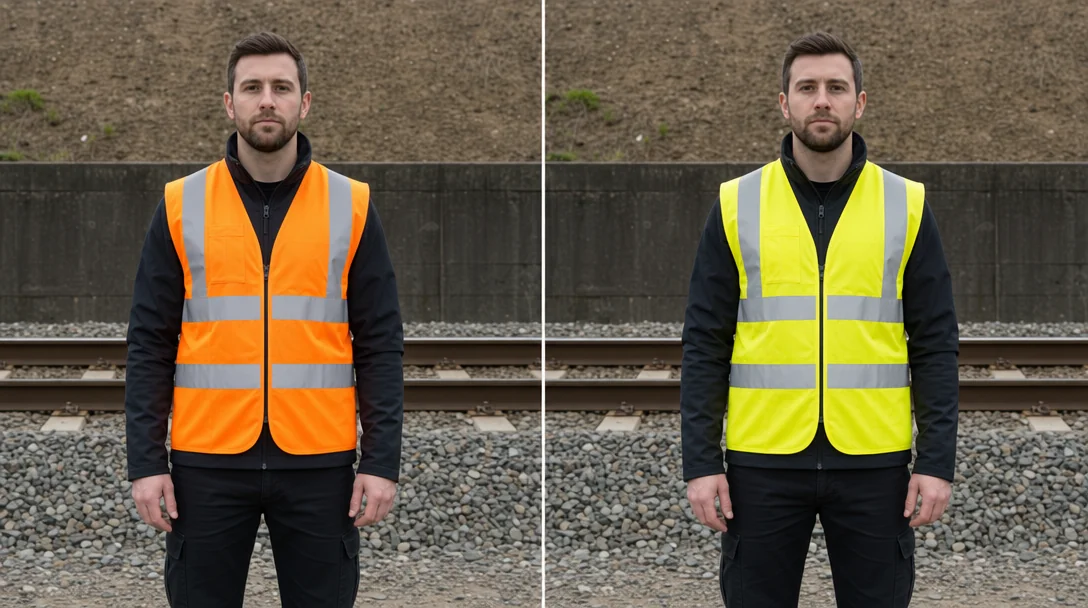
鉄道用高視認性衣服にオレンジが選ばれたのは、数十年にわたる運用経験を通じて進化してきたものです。初期の鉄道安全服は入手可能な高視認性素材を使用しており、最も広く生産されていた蛍光色であった黄色が一般的でした。しかし、事故調査やヒヤリハット分析は、鉄道環境においてオレンジがより良い結果をもたらすことを一貫して示してきました。
1990年代から2000年代にかけて鉄道安全基準が正式化されるにつれ、蓄積された証拠はオレンジを推奨色として支持しました。RIS-3279-TOMおよびヨーロッパ各地の類似基準は、この選択を義務要件として成文化しました。今日、オレンジは英国およびヨーロッパの大部分で鉄道用ハイビズのユニバーサルカラーとなっており、他の業界では特定の視認性ニーズに応じて黄色とオレンジの両方が引き続き使用されています。
鉄道用装備の最小視認面積とテープ配置
鉄道用ハイビズ衣料の物理的設計は、作業者が関連するすべての視角から、求められる検知距離で視認できるよう詳細に規定されています。
必要な視認面積の測定値
RIS-3279-TOMに基づき、衣料は該当クラスについてEN ISO 20471で規定された視認面積要件を満たす必要があります。クラス2の衣料では、蛍光背景材の最小面積は0.50平方メートル、再帰反射テープの最小面積は0.13平方メートルです。クラス3では、これらの数値はそれぞれ0.80平方メートルと0.20平方メートルに増加します。
これらの測定値は恣意的なものではありません。鉄道運用に関連する距離で人体が検知されるために必要な最小視認面積に関する研究に基づいています。蛍光材はその明るい色によって昼間および夕暮れ時の視認性を提供し、再帰反射テープは列車の前照灯の光を運転士に反射して戻すことで夜間の視認性を提供します。
調達チームは、購入する衣料がこれらの正確な仕様に基づいて試験され、認証されていることを確認する必要があります。認証文書には、達成されたクラス、試験された材料、および評価を実施した試験機関が明確に記載されている必要があります。目視検査だけでは視認面積要件への適合を確認できないことに注意することが重要です。
再帰反射テープのパターン
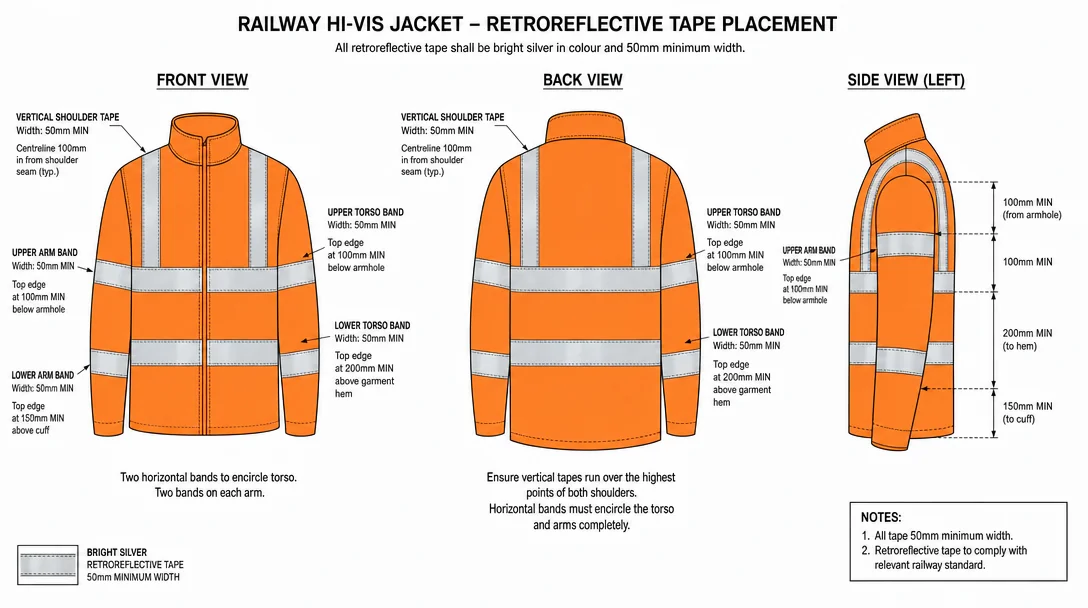
鉄道用衣料の再帰反射テープの配置は、EN ISO 20471で定義された特定のパターンに従います。タイプRの衣料では、テープは指定された高さで胴体周りに水平バンドを形成し、さらに肩の上に追加のテープを配置してHパターンまたはXパターンを形成する必要があります。この配置により、着用者が全方向から視認でき、遠距離でも人体の形状が認識可能になります。
再帰反射テープの最小幅は、ほとんどの用途で50mmです。一部の鉄道専用衣料では、再帰反射面積を増やし視認性性能を向上させるために、より幅広のテープを使用する場合があります。テープは、ポケット、ファスナー、その他の衣料の特徴によって遮られない位置に配置する必要があります。また、着用者が鉄道作業に典型的な動作で曲げたり、手を伸ばしたり、動いたりする際にもその効果を維持できる位置に配置する必要があります。
鉄道要件を満たす衣料の種類
RIS-3279-TOM準拠の衣料は、いくつかのスタイルで提供されています。ベストは最もシンプルで費用対効果の高い選択肢であり、通常タイプR構成でクラス2を達成します。ジャケットは必要な視認性性能を維持しながら天候からの追加保護を提供し、多くは腕を蛍光材と再帰反射テープで覆うことでクラス3を達成するよう設計されています。
カバーオールは全身を覆い、胴体と脚の両方に蛍光材を施す設計でクラス3を達成できます。これらは、天候やバラストおよび線路材料による汚染にさらされる線路保守作業者に一般的に使用されています。衣料の種類の選択は、各役割の具体的な作業条件とリスク評価に基づくべきです。
関連: 12時間勤務のための通気性&軽量安全ジャケット:2025年のおすすめ
耐候性鉄道用ハイビズ:雨、風、寒冷気候へのソリューション
鉄道作業者はあらゆる気象条件下で屋外で作業します。作業者のハイビズ衣料は、完全な視認性適合を維持しながら、雨、風、寒さから保護する必要があります。これは製造業者が対応しなければならない特定の設計上の課題を生み出します。
鉄道作業者はあらゆる条件に直面する
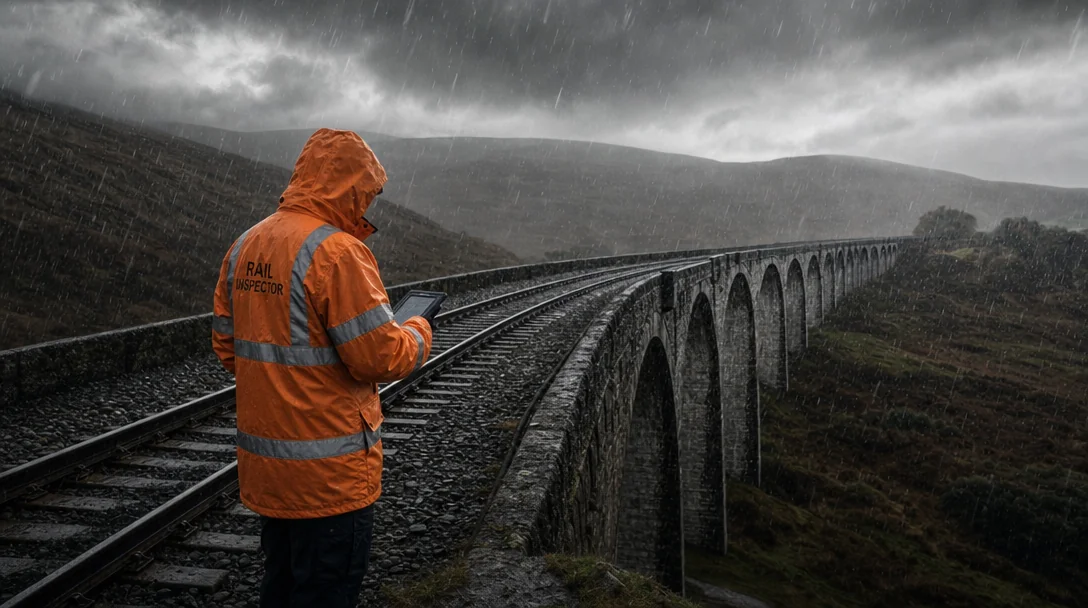
線路保守および検査作業は天候に関係なく継続されます。鉄道インフラは安全な列車運用を確保するために維持される必要があり、この作業は雨や寒さを理由に延期することはできません。作業者は、激しい雨、開けた高架橋での強風、冬の夜勤時の氷点下の気温、夏の軌道敷設作業中の強い日差しにさらされる可能性があります。
これらの条件で着用されるハイビズ衣料は、同時に複数の機能を果たさなければなりません。RIS-3279-TOMで要求される視認性保護を提供し、雨の中で作業者を乾燥状態に保ち、風冷から保護し、肉体労働中の過熱を防ぐために十分な通気性を確保する必要があります。これらの要件のバランスを取ることは、重要なエンジニアリング上の課題です。
関連: 寒冷地用セーフティジャケット:完全詳細プロフェッショナルガイド
防水・防風要件
防水性鉄道用ハイビズジャケットは、特定の性能基準を満たす必要があります。生地は持続的な降雨条件下で水の浸入を防ぐ必要があり、通常は少なくとも5,000mmの耐水圧評価で試験されます。縫い目は、縫い穴からの水の浸入を防ぐためにシールする必要があります。ファスナーは覆うか防水加工を施す必要があります。
防風性能も同様に重要です。露出した高架橋、橋、開けた線路区間の鉄道作業者は、周囲の地形の空気力学的効果や通過する列車の気流により、地上レベルの測定値よりも大幅に高い風速を経験する可能性があります。衣料は通気性を維持しながら風の浸入を防ぐ必要があります。
課題は、防水および防風処理が蛍光材の染色堅牢度に影響を与える可能性があることです。雨や湿気は、乾燥条件下よりも蛍光染料を急速に劣化させる可能性があります。製造業者は、生地の蛍光性能を損なわない防水加工プロセスを使用する必要があります。これは、耐候性鉄道用ハイビズ製品を評価する際の重要な考慮事項です。
関連: 乾いたまま、見られる状態に:防水反射ジャケットのガイド
視認性を損なわないレイヤリング
レイヤリングは、変動する気象条件を管理するための一般的なアプローチです。作業者は寒い条件でシフトを開始する際に保温インナーの上にハイビズジャケットを着用し、日中気温が上がるにつれてジャケットを脱ぐ場合があります。しかし、レイヤリングは管理が必要な視認性リスクをもたらします。
作業者が外側のハイビズ層を脱ぎ、下に非ハイビズ衣料を着ている状態になると、視認性保護を即座に失います。これが、鉄道安全衣料プログラムが通常の作業中に視認されるすべての層が必要な視認性基準を満たすことを確保すべき理由です。あるいは、インナー層自体がハイビズ準拠であれば、外側の層を脱いでも作業者は保護されたままになります。
Some manufacturers offer modular systems where an inner hi-vis vest can be worn under a non-hi-vis weather shell. This approach allows the shell to be removed in warm conditions while the vest maintains compliance. However, in railway environments, the outer garment visible to train operators must itself be compliant, so this approach must be carefully evaluated against the specific operational requirements.
Common Compliance Mistakes Railway Procurement Teams Make
Procuring railway hi-vis clothing involves navigating specific requirements that differ from general industrial safety clothing. The most common compliance errors include:
-
Ordering yellow instead of orange — Yellow is the most common hi-vis color across all industries, making it the default offering from many suppliers unfamiliar with railway requirements
-
Not verifying RIS-3279-TOM certification — EN ISO 20471 compliance alone is insufficient for railway work; the garment must meet additional railway-specific criteria
-
Ignoring wash durability requirements — Lower-cost garments may use fluorescent materials that degrade rapidly under industrial washing conditions
-
Failing to plan replacement cycles — Treating hi-vis as a one-time purchase rather than budgeting for 12-18 month replacement cycles
Ordering Wrong Color: Yellow Instead of Orange
The most frequent compliance error is ordering yellow hi-vis garments instead of the orange required by RIS-3279-TOM. This mistake often occurs when procurement teams order from suppliers who supply general industrial hi-vis and are not familiar with railway-specific requirements. Yellow is the most common hi-vis color across all industries, so it is the default offering from many suppliers.
The consequences of this error are serious. Workers wearing yellow hi-vis on Network Rail infrastructure are not compliant with RIS-3279-TOM, which can result in site access denial. More importantly, they are at increased risk because yellow does not provide optimal contrast in the railway environment. Procurement teams must explicitly specify orange fluorescent material and verify this specification in all purchase orders and product certifications.
Not Verifying RIS-3279-TOM Certification
Some suppliers claim that their garments are suitable for railway use without providing actual RIS-3279-TOM certification documentation. EN ISO 20471 compliance alone is not sufficient for railway work. The garment must meet the additional requirements specified in RIS-3279-TOM, including the orange color requirement and specific tape configurations.
Procurement teams should request and verify certification documentation before placing orders. This documentation should come from an accredited testing laboratory and should specifically reference RIS-3279-TOM compliance. If a supplier cannot provide this documentation, the garments should not be purchased for railway use.
Ignoring Wash Durability Requirements
EN ISO 20471 specifies that garments must maintain their certified performance after a defined number of industrial wash cycles. For railway workers, whose garments become contaminated with trackside dirt, oil, and other substances, regular industrial washing is essential. If a garment loses its fluorescent color or retroreflective performance after washing, it is no longer compliant.
Some lower-cost garments use fluorescent materials that degrade rapidly under industrial washing conditions. The initial certification may be valid, but the practical service life of the garment is much shorter than expected. Procurement teams should ask suppliers for wash test data that demonstrates how many industrial wash cycles the garment can withstand while maintaining its certified performance levels.
Failing to Plan Replacement Cycles
High-visibility clothing has a finite service life. Fluorescent materials fade with UV exposure, retroreflective tape degrades with abrasion and chemical exposure, and the physical integrity of garments deteriorates with use. Railway organizations must plan for regular replacement of hi-vis clothing to ensure that all workers are wearing garments that still meet their certified performance levels.
A typical replacement cycle for railway hi-vis garments is 12 to 18 months, depending on usage intensity and washing frequency. However, garments should be inspected regularly and replaced sooner if they show signs of fading, tape damage, or physical deterioration. Procurement budgets should account for this ongoing replacement cost rather than treating hi-vis as a one-time purchase.
Sourcing RIS-Compliant Hi-Vis Jackets: What to Look for in a Manufacturer
Selecting the right manufacturer for railway hi-vis clothing is critical for ensuring ongoing compliance and product quality. Several factors should guide this decision.
Certification Verification Process
A reputable manufacturer will provide comprehensive certification documentation for all railway-compliant garments. This includes EN ISO 20471 test reports from accredited laboratories, RIS-3279-TOM compliance statements, and material specifications for both the fluorescent fabric and retroreflective tape. The documentation should clearly identify the test laboratory, the date of testing, the specific products tested, and the results achieved.
Manufacturers should also have a quality management system in place that ensures ongoing consistency between tested samples and production garments. Regular batch testing and quality audits demonstrate that the manufacturer is committed to maintaining certified performance levels across all production runs.
What Questions to Ask Suppliers
When evaluating suppliers for railway hi-vis, procurement teams should ask specific questions. What is the fluorescent color specification, and can you confirm it is orange to RIS-3279-TOM requirements? What class of EN ISO 20471 does the garment achieve? How many industrial wash cycles has the garment been tested for while maintaining certification? Can you provide test reports from an accredited laboratory? What is the minimum order quantity and lead time for production?
Additional questions should address the manufacturer’tains ability to customize garments for specific requirements. Can retroreflective tape be positioned to meet specific garment designs? Can logos or text be applied without compromising the certified visibility area? Can the manufacturer produce garments in a range of sizes to accommodate all workers in the workforce?
HSafetyJackets Capabilities
When evaluating suppliers for railway hi-vis, procurement teams should verify that the manufacturer has specific experience with RIS-3279-TOM orange fluorescent garments and can provide EN ISO 20471 Class 2 and Class 3 options. HSafetyJackets produces orange fluorescent garments designed specifically for railway environments, with customization services including logo printing, embroidery, and tape configuration adjustments while maintaining full certification compliance. Based in Shenzhen and EN ISO 20471 certified since 2010, the company serves railway operators, contractors, and industrial organizations worldwide with competitive wholesale pricing and reliable delivery schedules.
Case Study: How a Rail Operator Reduced Incidents with Proper Hi-Vis
A mid-size regional rail operator in the United Kingdom experienced a series of near-miss incidents involving trackside workers over a twelve-month period. Investigation revealed that several contributing factors were related to inadequate high-visibility clothing. Workers were wearing a mix of yellow and orange hi-vis garments from different suppliers, with varying levels of visibility performance. Some garments had faded significantly after repeated washing, and several vests did not meet the Class 2 minimum visibility area.
The operator implemented a comprehensive hi-vis clothing program based on RIS-3279-TOM requirements. All garments were replaced with certified orange Class 2 jackets and vests from a single supplier. A replacement schedule was established to ensure that no garment remained in service beyond its certified wash life. Workers received training on the importance of maintaining their hi-vis clothing and reporting any damage or fading immediately.
Within six months of implementing the new program, near-miss incidents involving visibility fell by 40 percent. Train operators reported that workers were more easily identifiable at distance, particularly during early morning and evening shifts. The consistent orange color across the entire workforce also improved supervisor ability to track worker locations during complex multi-team operations. The investment in compliant, standardized hi-vis clothing delivered measurable safety improvements that justified the program cost many times over.
FAQ: Railway Hi-Vis Compliance for Contractors and Subcontractors
Do subcontractors need to wear RIS-3279-TOM compliant clothing on Network Rail sites?
Yes. RIS-3279-TOM applies to all personnel working on or near the line within Network Rail infrastructure, regardless of employment status. Subcontractors, temporary workers, and visitors must all wear compliant orange hi-vis garments. The principal contractor is responsible for ensuring that all personnel on site meet this requirement.
Can EN 17353 hi-vis be used for railway depot work?
EN 17353 products may be acceptable in depot areas where there is no exposure to operational lines. However, any area where workers could encounter moving rolling stock or access live tracks requires EN ISO 20471 compliant clothing with RIS-3279-TOM certification. A site-specific risk assessment should determine the appropriate standard for each work area.
How often should railway hi-vis garments be replaced?
The replacement cycle depends on usage intensity, washing frequency, and garment condition. A typical cycle is 12 to 18 months for daily-use garments. However, garments should be inspected regularly and replaced immediately if they show signs of fading, tape damage, or physical deterioration that compromises their visibility performance.
Can logos or company branding be applied to railway hi-vis garments?
Yes, logos and branding can be applied provided they do not reduce the certified visibility area below the minimum requirements for the garment class. The placement of logos should be carefully planned to avoid overlapping with retroreflective tape or reducing the effective fluorescent background area. HSafetyJackets offers customization services that maintain full certification compliance while adding company branding.
What happens if a worker is found wearing non-compliant hi-vis on site?
Non-compliant hi-vis is a serious safety violation on Network Rail infrastructure. Workers may be denied access to the site or removed from trackside areas until compliant clothing is provided. Repeated violations can result in contractual penalties for the employer and may trigger regulatory investigation. It is essential that all workers understand the requirements and that compliant clothing is available at all times.
Ensuring that railway workers have the correct hi-vis clothing is a fundamental safety obligation. The combination of RIS-3279-TOM requirements, EN ISO 20471 performance standards, and the specific orange color mandate creates a clear framework for compliance that must be followed without exception. By understanding these requirements, selecting certified garments, and maintaining a disciplined replacement program, railway operators and contractors can significantly reduce visibility-related incidents and protect their workforce.
Contact HSafetyJackets for wholesale orders of RIS-3279-TOM compliant railway hi-vis clothing. Our team can help you select the right garments for your operational requirements and provide competitive pricing for bulk orders. Reach out to HSafetyJackets for custom solutions tailored to your railway safety program.