






Introduction: Why ANSI Compliance Matters in Modern Workwear
ANSI-compliant ANSI-compliant workwear in the current fast-paced industries, where visibility and safety are synonymous factors, is important in the safety of the workers.It can be a save or a loss in terms of saving a life in a construction site, a warehouse or any other place that requires the proper safety gear. Also under compliance is that the workwear is observable under all the necessary safety standards and this aids the organizations in attaining safety compliance in the workplace and reducing the chances of accidents.
Learning the Relationship between Worker Safety and Visibility.
Safety is directly impacted,directly impacted, particularly when there is movement in the vehicles or machinery. Employees in reflective attire will be more visible to the driver and fellow employees, hence reducing the chances of accidents. Research has always indicated that the increased visibility can reduce workplace injuries and fatalities by a significant margin.
The Benefits of ANSI Standards as the Standard of Protection Clothing.
ANSI establishes the standards of high-visibility apparel apparel so that all the safety garments have the same requirements. These standards help manufacturers in designing apparel with consistent protection to ensure that the quantity of protection, visibility, and safety is consistent among all workers.
ANSI Compliance What does ANSI compliance involve?
ANSI compliance is used in reference to the fact that a garment has been tested and it was compliant with the specific rules as established by the American National Standards Institute (ANSI). It establishes that materials, colors,materials, colors, and reflective elements work to meet stipulated levels in changing conditions.
The Aid of the American National Standards Institute (ANSI).
ANSI comes up with standardized safety guidelines in various industries. It aims at assuring the right protection of the workers by standardizing the visibility requirements so as to improve a safer, more dependable working environment.
The Way ANSI Standards Promote Standardized Safety in Industry.
ANSI removes confusion by setting up the same guidelines and making sure that regardless of the industry, such as construction, logistics, or emergency response, the workers wear the same apparel to be seen the same way.
A Brief History of ANSI Workwear Standards
The ANSI standards development goes back several decades and has been changing with the culture of safety at work. With the presentation of visibility and centric and centric guidelines, personal protective equipment (PPE) was transformed from 2015 to 2020, from 2015 to 2020, and this fashioned the current safety practices.
The Development of High-Visibility Apparel Needs.
First, the reflective workwear was restricted to the road workers. However, as the industries realized the necessity to be seen, the demands were also spread over to all industries that had either low-light or high-risk situations.
Significant additions to the ANSI/ISEA 107 Standard.
- 1999: ANSI/ISSEA 107 standard was first introduced.
- 2004: Extension to incorporate public safety workers.
- 2010: The introduction of combined-performance materials.
- globalization, 2015 to 2020: globalization, modernization of materials.
ANSI/ISEA 107 Standard knowledge.
The ANSI/ ISEA 2015- 2020: 107 standard offers a performance standard, ANSI/ISEA-visibility safety apparel. It categorizes apparel on the basis of the use, the extent of visibility and weather. weather, visibility,
ANSI/ISEA 107 Classes and Requirements, Table.
| クラス | Application Example | Minimum Background Area | Reflective Material |
| クラス1 | Drivers, warehouse attendants. | 217 in² | 155 in² |
| クラス2 | Construction workers, roadway workers, and the weather. weather. roadway workers, and the weather. | 775 in² | 201 in² |
| クラス3 | Highway and emergency personnel. | 1240 in² | 310 in² |
Amendments and changes to the changes to the roadway in the ANSI 107 standard, changes to the standard, and, changes to the standard, and changes to the latest edition.
The most recent one deals with combined-performance materials, better labeling, and new design standards of such accessories as gloves and armbands.
Why the 107 standard armbands? armbands? ISISIs Crucial for Today’s Work Environments
Contemporary WorkplacesWorkplaces are associated with ambivalent lighting and traffic conditions. The 107 Standard will make sure that all workers are visible at all times, which will keep them in compliance and limit liability.
ANSI-Compliant Workwear Classification.
Class 1, Class 2, and Class 3 are classifications of various levels of protection depending on job hazards.
- クラス1: Low-risk environments
- クラス2: Moderate traffic or the closeness to the moving vehicles.
- クラス3: Traffic or complicated backgrounds.
The method of recognizing ANSI workwear that is labeled appropriately.
Always check for:
- ANSI/ISEA 107 label
- Manufacturer’s name
- Class and type
- Certification number
ANSI Workwear Performance Requirements.
The essential performance factors are:
- Minimum reflectivity
- Fluorescent color photometric standards.
- Washer resistance and resistance to sunlight.
- Testing guarantees that garments are safe at the workplace even when they are used over a long period.
ANSI-Compliant Apparel Key Components.
- 反射ストリップ: Reflective strips must be effectively placed to get the greatest quantity of light reflections.
- High-Visibility Colors: They are typically fluorescent yellow-green, orange,yellow-orange and red.
- Design: Its coverage is sufficient on the torso, the arms, and the shoulders. shoulders. the shoulders.
ANSI-Compliant Workwear: Types.
- Outerwear and jackets: In case it is cold or wet.
- Safety Vest: Light Vest: Light construction and maintenance.
- High-Visibility T-Shirts: This is applied on a daily basis in warehouses and logistics.
- Special Equipment: rain gear, pants,gear, pants, and all-weather and all-weather coveralls.
The Industries require ANSI-compliant workwear.
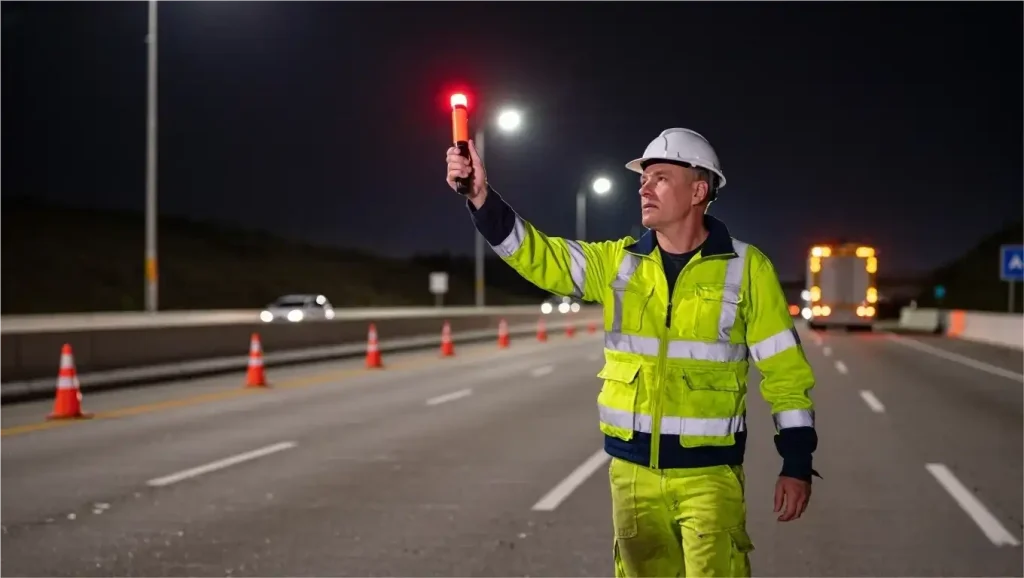
- Construction and Roadway Workers.
- Electrical crews and utility.
- Warehouse Personnel
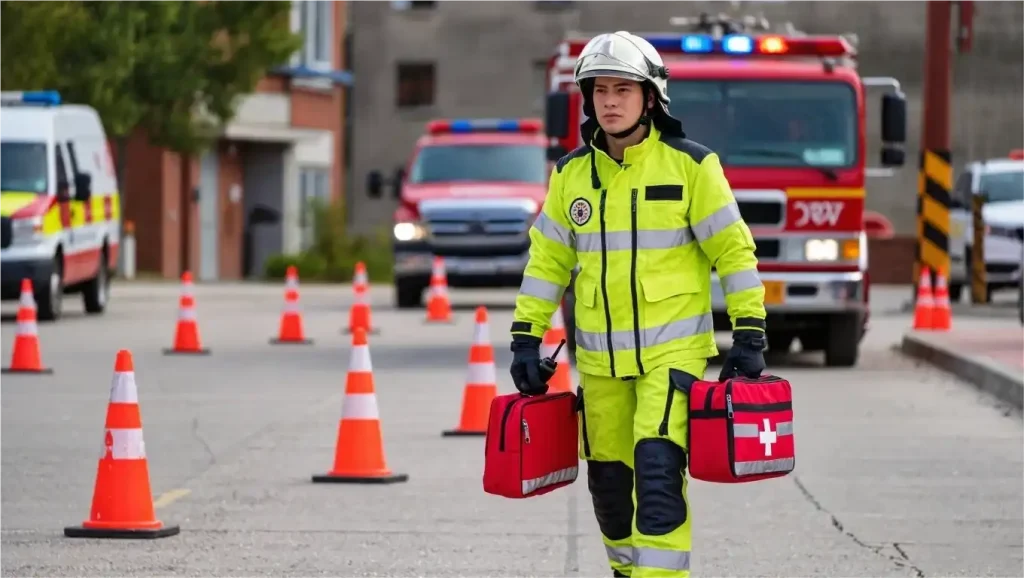
- Emergency Responders
The ANSI Classes: How to Select the Right ANSI Class in Your Job.
Evaluate the following variables:
- Traffic speed and proximity
- Lighting conditions
Type of work performed
- A sound balance of safety, comfort, and cost-effectiveness will guarantee feasible compliance.
Popular Myths about ANSI Workwear.
- Myth 1: ANSI-approved: all reflective clothing.
- Myth 2: Color is not an issue—it is.
- Myth 3: It is the employer who is to blame, not only employees who are also blameworthy.
ANSI-Compliant Branding of apparel and customization.
Logos and branding can be added by printing, embroidery and heat transfer. Nevertheless, placement should not disrupt reflective sections and decrease visibility.
Maintenance and maintenance of ANSI working clothes. workwear.
- Washing: Wipe with soft detergent, however there should be no bleach.
- Replacement: To be replaced in case of reflectivity tiring or when the fabric is destroyed.
- ストレージ: Store in a dark place that is dry in order to preserve the colors.
OSHA and legal requirements of high-visibility clothing.
In safety regulations, ANSI/ISEA 107 is referred to as OSHA. Firms and companies should provide the required protective equipment to the workers who are exposed. Failure to comply can result in punishments or even breach of safety. The case studies show that the accident rates reduced by 60 per cent when high-visibility clothes were worn. Greater visibility will increase the awareness of the workers and active safety culture.
The ANSI-Compliant Workwear Innovations.
- Intelligent clothing that becomes transparent and opaque.
- Light designs in order to be more comfortable.
- Green materials are less harmful to the environment.
ANSI Workwear for Different Weather Conditions
- Cold weather: Jackets and cold weather gloves which are thermal lined.
- Summer dresses: moisture-wicking.
- The rainy seasons: windproof and waterproof designs.
Checking and Securing Continued Compliance.
Internal audits and the cooperation with certified suppliers should help keep the compliance. Maintain all the records of the inspections and records.
ANSI Workwear Program Implementation Tips.
- Train the staff on high-visibility reasons.
- Have a replacement regime of PPEs.
- Make safety clothing a part of the company culture.
ANSI Standards and Workplace Safety in the Future.
It can be improved by smart tracking technology and real-time visibility monitoring implemented in the future, which will enhance the safety of workers and data-driven compliance platforms.
Conclusion: Constructing a safer workplace using ANSI-compliant workwear.
ANSI-compliant workwear will provide long-term security, regulation assurance, and tranquility. Through compliance on safety issues at the workplace and by following ANSI 107 standards, companies are capable of creating a culture of safety first, where all workers are regarded, appreciated, and taken care of.