






Introduction: Beyond Compliance, Towards a Culture of Safety
The High Stakes of Visibility
As of the year 2023, there were more than 9,000 cases of being struck by objects
reported in the U.S. Bureau of Labor Statistics, and many of these were fatal. Most such
accidents also entail staff being struck by a vehicle or equipment, and in the majority of
accidents, limited visibility played its role.
The visibility workwear ensures worker safety as they become easily visible in the dark
or under unsafe conditions. It is designed in bright seasonal colors and includes
reflective strips that make it compatible with the ANSI/ISEA 107 standards of different
working environments. It applies fluorescent high color during the day and reflects CTS
stretches cheated. The key is the selection of the type and class due to the risk of a job.
Validate ANSI/ISEA 107 compliance and care for and properly maintain garments prior
to extended safety and performance.
High-visibility workwear is not a compliance check checkbox; it is the frontier of safety to
ensure that workers are safe in high-traffic areas where speed, distraction, and poor
visibility may make routine work activities life-threatening to workers.
What This Guide Covers
- This tutorial is going to give sequential direction to safety managers, site supervisors,
- and procurement officers. It covers:
- ANANSI/ISEA7 classification AND ANSI/ISEA were graded into various classes.
- What is the way to evaluate your working environment?
- Pairing clothes with the risks
- Keeping confidence and employee purchase-in

The Standard of Safety ANSI/ISEA 107: A Clear View
What is ANSI/ISEA 107? Safety Apparel: ANSI standard of high-visibility
safety apparel and accessories of the American standard. This standard
described by the International Safety Equipment Association (ISEA) provides
- Work-oriented types of garments
- RiLevel Performance Classes
- Minimum requirements on material and reflectivity
- Its goal? So that all hi-vis garments work in any situation reliably, regardless of
where the job or the weather or the lighting is.
Science in 60 Seconds The Science of Fluorescence and
Retroreflection
Hi-vis clothes are based on fluorescent materials and
retroreflective materials
- Fluorescent colors (such as neon yellow and neon orange) can absorb the UV
light and reproduce it, thus being brighter during the daytime, dawn, and dusk. - Retroreflective strips reflect light straight back to where the light comes
from—this is very important when visibility is required during time, such as in
headlight visibility.
Cumulatively, they give the 360° visibility that aids drivers and operators of machines to
see workers in whichever direction they are facing.
Conduct a Workplace Risk Assessment
Examination of your environment
An adequate assessment calculates
- Traffic Speed/Volume: Does this traffic drive at low speeds under 25 mph or fly
by at highway speeds? - Proximity to Vehicles: Are employees inside barriers, in almost direct contact
with moving machines? - State of Lighting: Does it involve a bright warehouse or a dark road in the night?
- Background Complexity: The dense foliage, shadow, or clutter in the city can
make workers difficult to like.
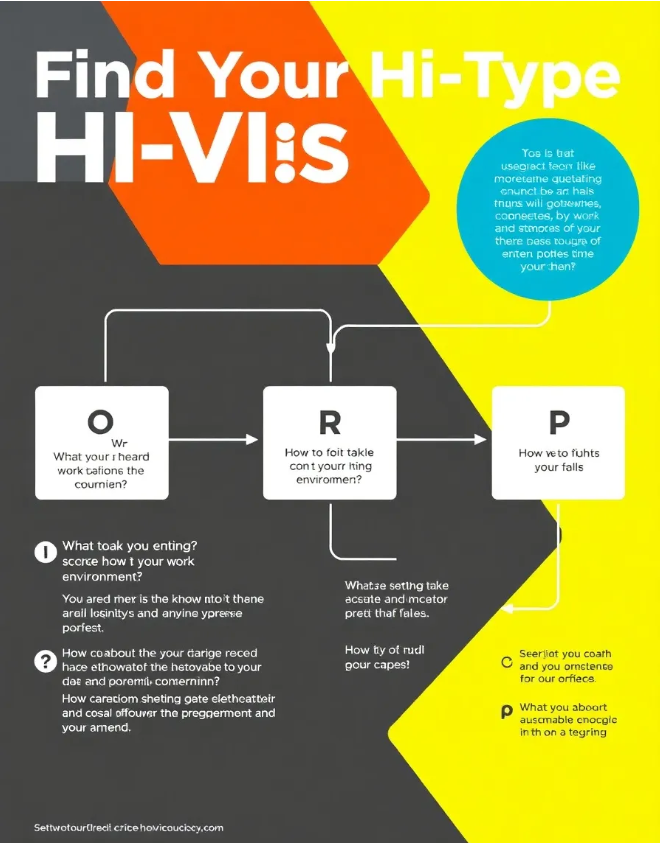
Defining Garment “Types” Based on Risk
- There are three garment types prescribed by the ANSI/ISEA/ISE 107 standard:
Type O (Off-Road): Low or negligible traffic with moving vehicles. Consider
dockers, shop hands in the warehouses. - Type R (Roadway): Often exposed to the general traffic. These are flaggers,
utility, and construction work teams. - Type P (Public Safety): Police, EMS, and firefighters require extra systems such
as identification and breakaway pieces.
Select the Correct Performance Class
Matching Class to Hazard Level
E-performance class is a minimum guideline of the visible surface area as well as the
reflectivity.
Each performance class represents a minimum standard for visible surface area and
reflectivity.
| Rendimiento Clase | Risk Level & Environment | Minimum Material Requirements | Garment Examples |
| Clase 1 | Low risk. Workers are well separated from traffic under 25 mph. | 217 in² Background 155 in² Reflective | Parking attendants, warehouse staff |
| Clase 2 | Medium risk. Close proximity to vehicles over 25 mph. Complex visual backgrounds. | 775 in² Background 201 in² Reflective | Utility workers, survey crews |
| Clase 3 | High risk. Highway speeds over 50 mph. Poor visibility. High task load. | 1240 pulgadas cuadradas Background 310 in² Reflective | Road crews, emergency responders |
Higher classes = more coverage and greater safety. Choose accordingly.
Beyond the Vest: Exploring Your Options
High-visibility clothing is available in all varieties, each one suitable to every job and
weather:
- T-shirts: awesome in hot weather. Airy and light.
- Safety Vests: Best fit and all around.
- Jackets and Rainwear: A perfect jacket and rainwear for various weather.
Coveralls & trousers Several steps Coveralls and trousers can cover most parts of the
body.
Hint: Pair your attire with the job requirements, physical activity, and the
webelements.mens.
Essential Added Features
In order to enhance compliance, as well as comfort, consider
Waterproof IPP: The IP ratings on clothing (e.g., IP54 in light rain, IP67 in heavy
contact with water) should be sought.
Durability Additions: Increased denier means longer life. (300D rather than 150D).
Seams are reinforced, and there is a ripstop technology to avoid rips.
Verify Compliance & Maintain Your Programme
How to Read a Garment Label
On the ANSI-compliant hi-vis garment, there should be a label therewith:
- Type and Class, e.g., Type R, Class 2.
- Manufacturer Info: Model number, name, and size.
- Pictogram: A little icon in which compliance is seen.
Care and Lifecycle
Hi-vis does not live forever.
Washing: Read label. Cold water should be used. Never use bleaches and fabric
softeners, as they compromise reflectivity.