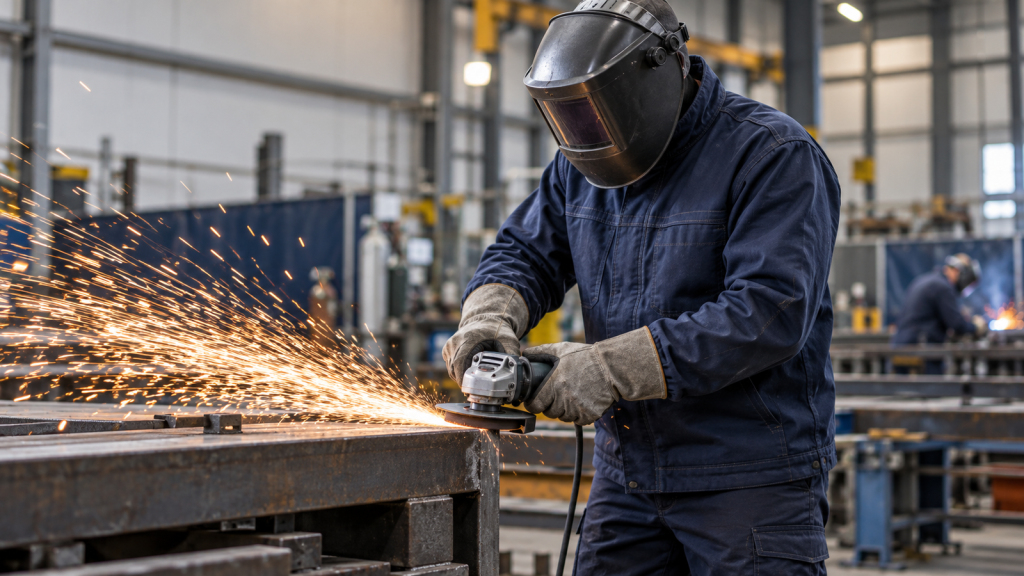
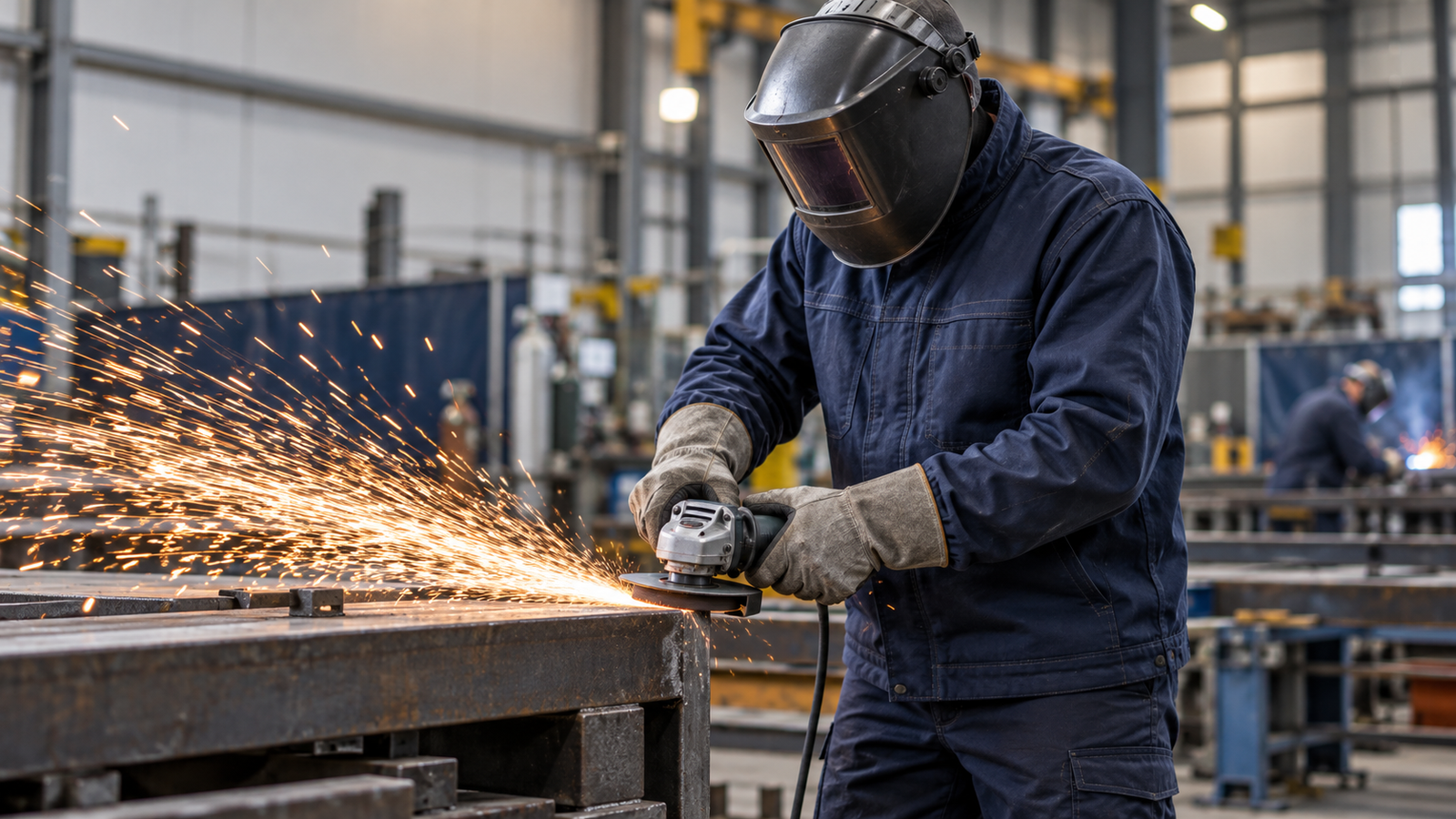
Sourcing workwear for welders, electricians, utility crews and oil and gas teams is specification-driven work, and flame resistant safety jackets are among the most specification-sensitive items on the list.
Flame resistant safety jackets are protective outer garments made from fabrics engineered to resist ignition and to self-extinguish once the heat source is removed, so the garment itself does not keep burning. For bulk buyers they are a documentation purchase: fabric composition, certification paperwork and laundering behavior decide whether an order is field-ready.
This guide is for safety managers, EHS leads and buyers evaluating FR workwear for bulk OEM orders: what to specify, which paperwork to demand, and how to judge a factory. Planning an FR program? Request our FR specification sheet — we will send the current documentation.
What Are Flame Resistant Safety Jackets?
Flame resistant clothing is the broader PPE category; the jacket is its outermost, most visible layer. Industrial FR programs are layered systems — base layers, mid layers, shell — and the jacket earns its place when crews need protection they can take on and off as hot work comes and goes. That layering logic drives the decisions below.
FR vs Flame Retardant: A Sourcing Distinction
One functional distinction matters at the negotiating table. Flame resistant fabrics are engineered at the fiber level — the protective behavior is built into the material itself. Flame retardant fabrics are base fabrics with chemically treated finishes that provide the flame performance, and cotton is the most common base, which is why cotton flame retardant workwear is such a widespread category, including our own cotton-based FR line. Neither is automatically superior — both are legitimate program choices at different price and durability points. Ask how the finish is documented to behave across laundering cycles, and request the report before committing to volume.
Which Workers Need FR Workwear?
FR clothing is commonly specified by employers and safety programs for roles with exposure to sparks and molten material, open flame, or short-duration thermal events associated with electrical work: welders and grinders, electricians, utility line crews, and oil, gas and petrochemical operations. Commonly specified — not universally mandated: whether a role requires FR is set by each employer’s hazard assessment, not by a rule a supplier can quote. Procure against that assessment.
FR Standards Commonly Referenced for Industrial Workwear
A guide could fill pages reciting standards; that is not what protects an order. What matters is which names appear on destination-market paperwork, and how to check that paperwork against the goods. Clauses, levels and test parameters belong in supplier documents — not a blog post.
North American References
On North American FR workwear documentation, commonly referenced names include NFPA 2112, NFPA 70E and ASTM F1506. Ask which standard each style is documented against, and require the certificate to name that exact style and fabric — a website name is not evidence.
European & International References
For European and many international destinations, EN ISO 11612, EN ISO 14116 and EN 1149 are among the names on FR garment documentation. The same discipline applies — names are not evidence; documents tied to fabric, style and batch are. Where the destination applies extra marking requirements, have the factory confirm in writing which documents cover them.
How to Read Supplier Certification Documents
Good paperwork discipline in FR procurement looks like this:
- Document types — actual reports and certificates from the issuing body, with numbers and dates, not screenshots or assurances.
- Batch mapping — a certificate that does not name the style, fabric or lot it covers cannot defend the shipment in an audit.
- Dates — paperwork has a shelf life; an expired document is a finding waiting to happen.
- Fabric-level vs garment-level — mill paperwork covers the fabric; finished-garment paperwork covers what you are buying.
- Audit file — organized by PO and batch, so any shipment can be defended years later.
Garment Types: FR Jackets, Vests, Work Pants and Coveralls
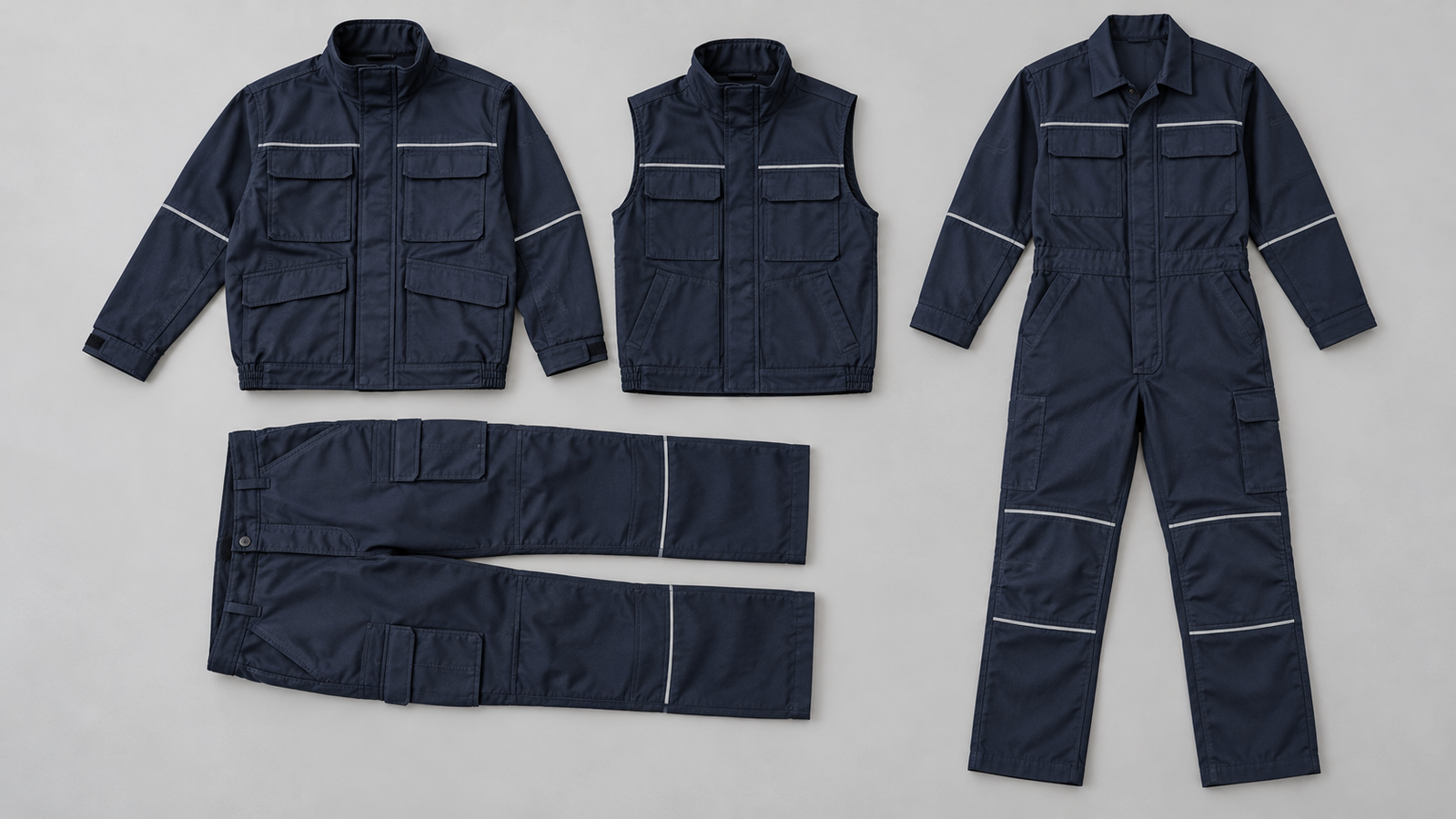
FR jackets anchor most programs but are rarely bought alone. Industrial buyers assemble a kit — shell, vest, pants, coveralls — matched to each crew’s exposure. Our FR line follows the same logic: flame retardant reflective work pants, FR coveralls and the flame retardant anti-static vest, built on cotton flame retardant fabrics.
Use this spec checklist to frame document conversations with any factory:
| Garment Type | Typical Hazard Exposure | Fabric Considerations | Layering & Combination Guidance |
|---|---|---|---|
| FR jacket (outer shell) | Hot-work zones: sparks, embers, brief thermal exposure | Fabric weight and certification level per supplier documentation | Worn over FR base and mid layers as part of a full FR system |
| FR vest | Intermittent hot-work proximity where a full jacket is not specified | Cotton FR construction; weight, finish and certification level per supplier documentation | Layered over FR base layers when lighter coverage plus visibility is needed |
| FR work pants | Lower-body sparks, grinding debris and slag in fabrication work | Matched to the top’s fabric; weight and certification level per supplier documentation | Ordered with matching tops in the same batch for fabric consistency |
| FR coveralls | Full-body exposure where hot work is not confined to the torso | One-piece cotton FR construction; weight and certification level per supplier documentation | Chosen where jacket-and-pants gaps are unacceptable; FR base layer underneath in cold conditions |
Know your garment mix? Send us your SKU list for a quote — pricing is confirmed per garment type, fabric and customization level.
The choice logic: jackets for crews moving between hot-work and standard zones; vests when the program wants FR coverage plus visibility in a lighter garment; pants ordered with the matching tops; coveralls when the hazard assessment shows exposure a two-piece kit cannot close — garment type follows the hazard assessment, never the catalog photo.
Combining FR Protection with High Visibility
When Do You Need Fire Resistant Reflective Safety Clothing?
Some crews face two hazards in one shift: thermal exposure from hot work, and traffic or mobile plant in low light. For them, fire resistant reflective safety clothing — garments combining FR fabric with retroreflective visibility elements — is the correct category, and a flame retardant reflective vest is often the lightest way to deliver both.
The common sourcing error is buying half the protection: a standard hi-vis jacket for a road crew doing occasional welding is visible but not flame resistant; an FR jacket without compliant reflective elements for night utility work protects the wrong half. Specify both attributes in the RFQ — flame resistance per your program’s documentation requirements, retroreflective performance per your visibility requirements — and verify both on the paperwork before the deposit. For visibility classes, see our guide to ANSI Class 2 vs Class 3 jackets.
Outdoor winter crews add a third variable: insulation under the FR shell. Safety programs commonly require every layer in an FR system to be flame resistant, making winter FR a layering specification — our cold weather safety jackets guide covers the thermal side.
How to Evaluate FR Workwear Suppliers for Bulk OEM Orders
For bulk OEM orders, supplier quality shows up in four places: the certification documents a factory can actually produce, the durability evidence behind the fabric, sampling before mass production, and batch-to-batch consistency when orders repeat. The checklist turns them into ten verifiable questions — ask in order, in writing, and file the answers.
- Verifiable certification documents — actual reports and certificates with issuer, number and date, not screenshots or emailed assurances.
- Document-to-batch mapping — every production batch traceable to the paperwork covering it, by style and fabric.
- Laundering durability reports — written documentation of expected FR performance across laundering cycles.
- A sample-first process — pre-production samples cut from the actual bulk fabric, approved before the line starts.
- Traceable fabric sourcing — the mill behind the fabric identified, with documentation traveling with each lot.
- Transparent MOQ and lead times — numbers per garment type and customization level, in writing, before you plan the season.
- A rework and defect policy — how non-conforming goods are replaced or credited, agreed before the first PO.
- FR-compatible customization — logo and embroidery methods confirmed compatible with the FR fabric and finish, in documentation.
- Batch-level packaging and labeling — cartons marked so your warehouse can match goods to batches and documents on arrival.
- Price stability on reorders — how pricing and fabric availability are protected when a seasonal program repeats.
These points overlap with general OEM due diligence — our safety jacket supplier checklist expands the factory-side evaluation and applies in full to FR programs.
FAQ
What is the difference between flame resistant and flame retardant workwear?
Functionally: flame resistant fabrics are engineered at the fiber level, while flame retardant fabrics — commonly cotton — carry chemically treated finishes that provide the flame performance. Both are legitimate sourcing categories; the decision should rest on your program’s requirements and the laundering documentation behind the specific fabric.
Can reflective stripes be added to FR garments?
Yes — FR-compatible reflective materials and attachment methods exist and are widely used on FR workwear. The sourcing rule is documentation: the factory must specify the reflective system as compatible with the FR fabric, and you verify it on the pre-production sample before approving the run.
What certification documents should I request from an FR workwear factory?
At minimum, the test reports and certificates that name the exact style, fabric and production lot, with issuer, document number and issue date. The ten-point supplier checklist above is the full list — request every item in writing and file it against the PO before shipment.
What MOQ applies to custom FR workwear OEM orders?
MOQ varies by garment type, fabric availability and customization level, and is confirmed per order — send your SKU list and target quantities and our team will confirm exact figures in writing. Treat any single flat MOQ quoted across a mixed FR program as a question to unpack.
How do FR requirements change for outdoor winter crews?
Structurally, not just seasonally: winter crews add insulation under the FR shell, and safety programs commonly require every layer in the system to be flame resistant, which makes winter FR a layering specification. Visibility also weighs more in low-light months — our cold weather safety jackets guide covers the thermal side.
Are cotton flame retardant fabrics suitable for every hot-work task?
Not automatically. Cotton flame retardant workwear is a widely used, cost-effective category, but suitability is task-specific: it depends on the hazard assessment for the role and the certification documentation for the specific fabric and finish. Evaluate per task, request the documents, approve on samples before committing volume.
Conclusion + Next Step
Buying flame resistant safety jackets is documentation work before it is garment work: map the hazards, choose garment types to match, demand batch-level paperwork, and evaluate the factory against the ten points above. Done in that order, an FR program becomes repeatable — same spec sheet, same audit file, season after season.
Next step: submit your FR workwear RFQ through our contact form with your garment mix, sizes, target quantities and destination market, and our team will respond with documentation and pricing for your SKUs.