






Introduction: Why Maximum Visibility Isn’t Negotiable
In this section, the author describes the importance of visibility at work.
The Importance of Being Caught Watching
High Visibility Safety Apparel (HVSA) has been defined to be important in worker protection.
The connection between the wearing of high-vis gear and avoiding accidents,including those that make workers get hit by machinery or vehicles, is direct.
The introduction of class 3 is more conspicuous and protective when compared to the ANSI/ISEA 107 guidance.
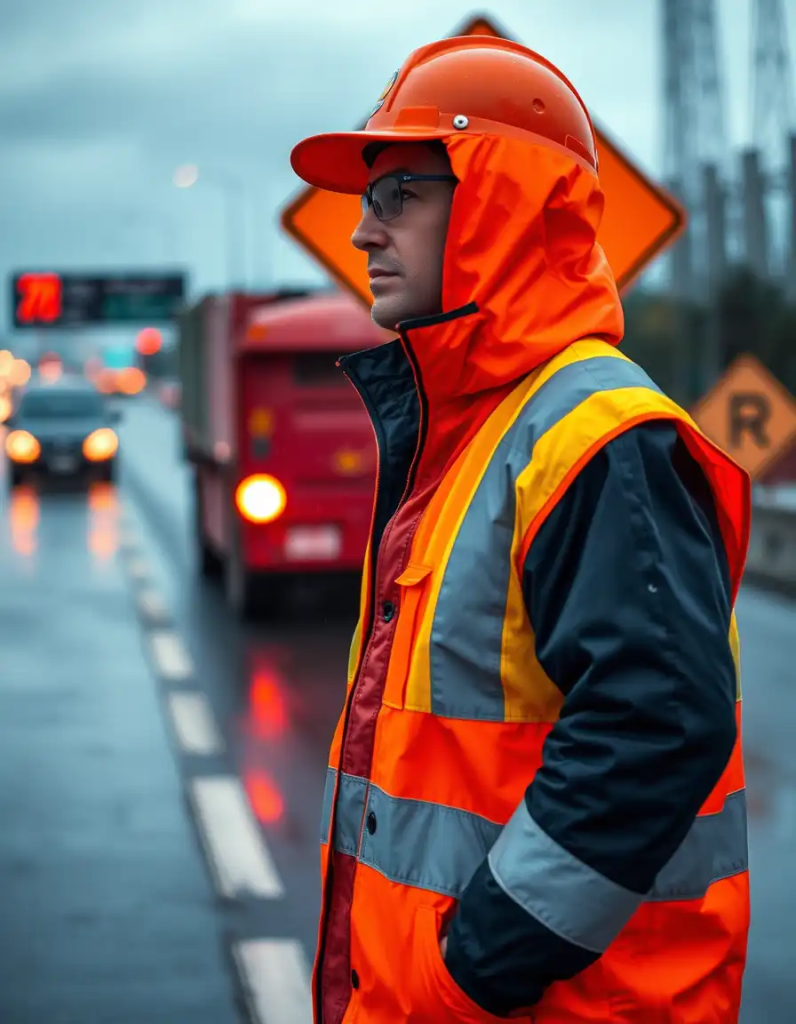
Class 3 high-visibility works in situations where the workplace is risky and very hazardous by giving maximum protection to the worker with the utmost visibility. These materials collaborate in making workers readily seen in daylight as well as during the nights using artificial light or headlights. Moreover, Class 3 clothes should include reflective stripes on the sleeves and legs so as to define the human frame in an all-round position.
Such visibility is important in work that requires this kind of visibility, like highway construction, flagging of roads, emergency response, ground operations at airports, and towing trucks. These are usually roles that require one to be working close to cars that are moving above 50 mph and in fog, rain or at night; the safety of the workers is dependent on the fact that they will be spotted clearly and as fast as possible.
Class 3 clothing comes in a variety of body and sleeve opening designs: jackets, rain gear, sweat and coveralls, and vests. Others have also incorporated extra details such as the flame-resistant qualities to be used in welding and electrical applications, breathable waterproof materials in rainy areas, and breaking-away styles to avoid being caught in machines.
Wearing Class 3 visibility gear is not only a good idea; it is frequently mandated by regulation or by employer safety measures. The employers should perform risk assessments and issue correct PPEs as set by ANSI/ISEA rules. Otherwise,
lack of such conduct may lead both to legal punishment and severe damage/death.
In a word, Class 3 high-visibility garments are a life-saving technique of safety. It guarantees visibility of the workers in risk-prone areas, hence minimising the risk of struck-by accidents and improving safety in general job sites. Identifying the appropriate Class 3 gear with respect to environmental hazards, work activities, and climatic conditions is one of the investments in regulation and safety of the workers.
Decoding the ANSI/ISEA 107 Standard
This explains the standard of safety regulating high-visibility clothes in the United States.
Framework of Safety
- ANSI/ISEA 107 is the regulation book of high-vis clothes.
- It classifies clothing into three types:
- Type of off-the-road jobs such as warehouses.
- Type R: Work in the roadway.
- Type P: Pollie, EMTs.
- There are also three of the so-called “Classes” (1, 2, and 3), within which the level of risk and the necessity of visibility are consideredComparing the Classes: A Clear Breakdown
This will contain a comparison table of Class 1, 2 and 3 clothes. It explains:The amount of fluorescent and reflective fabric required.
What employees normally put on each of the classes
- Class 1: Lightly travelled locations.
- Class 2: medium-risk, like a utility worker.
- Class 3: heavy or hazardous working conditions.
| Performance Class | Minimum Background Material | Minimum Retroreflective Material | Typical Use Case / Environment |
| Typical Use Case / Environment | 217 in² (0.14 m²) | 155 in² (0.10 m²) | They are most effective when installed in areas of the low traffic range e.g. loading docks or restricted parking areas. |
| Class 2 | 775 in² (0.50 m²) | 201 in² (0.13 m²) | Moderate-risk zones like roadside construction, utility work, or daylight survey crews. |
| Class 3 | 1240 in² (0.80 m²) | 310 in² (0.20 m²) | Highest-risk environments—high-speed roads, emergency scenes, flagging operations, and low-light conditions. |
Design Requirements for Maximum Conspicuity
The full-body reflective visibility is one of the characteristic features of Class 3 garments:
- Unlike jackets of Class 1 and 2, sleeve reflectivity and leg reflectivity are compulsory.
- These clothes shape a familiar human form, mostly in headlights or poor lights.
- This human form effect enables the driver to realise movement quicker, thus minimising the possibility of being in an accident.
In full jacket and pants types, Class 3 usually has jackets that are equipped with armbands and the pants with leg bands, alike.
When is Class 3 High Visibility Mandatory?
In this section, you will be informed when you must, in law and in practice, use Class 3.
Evaluation of Risk Environment
- Scenarios that require Class 3:
- Traffic speed (more than 50 mph).
- Complicated or busy backgrounds (urban centres, buildings in construction).
- Fog, rain, and snow.
Job Roles Requiring Class 3 Protection
Examples of occupations that are to use Class 3:
- Workers on the road and highway.
- First responders (emergency (ambulance, police)).
- Tow truckers and traffic attendants.
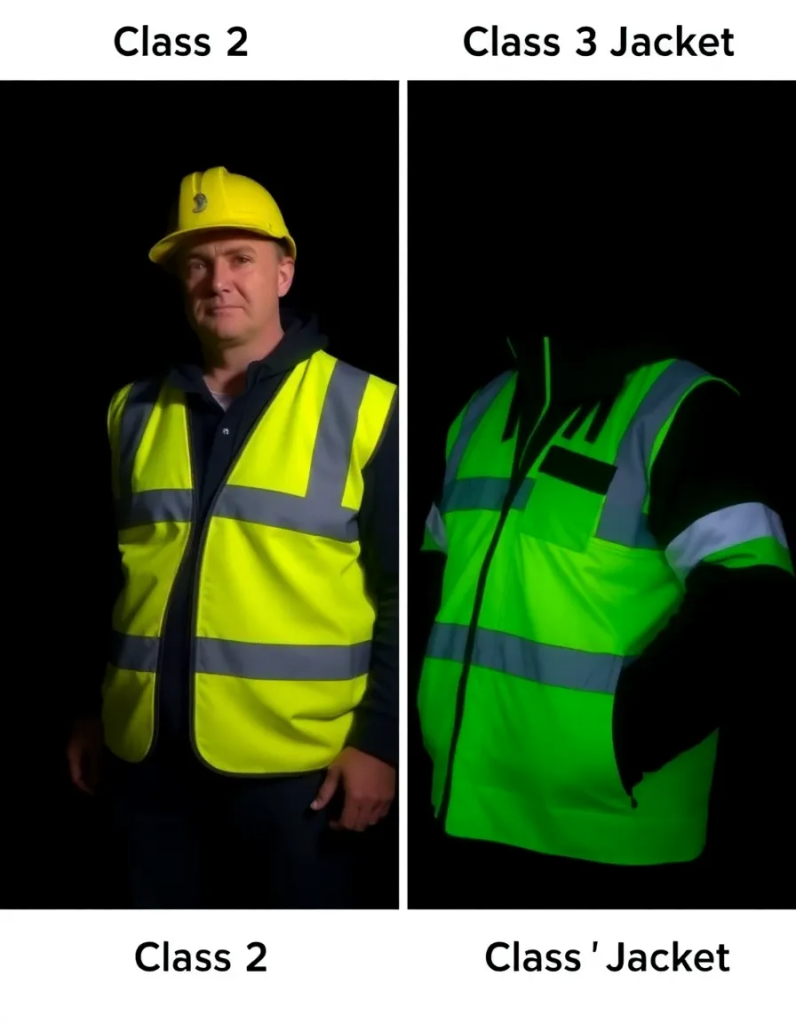
- A visual contrast is proposed between Class 2 and Class 3 so as to demonstrate the fact of how much more visible Class.
Selecting the Right Class 3 Apparel
This assists the employers and safety managers in deciding the appropriate form of Class 3 clothing.
Type and Various Considerations in Garment Types
There are a lot of forms of Class 3 clothing: vests, jackets, sweatshirts, and rainwear.
- The right decision will be dependent on considerations in Garment .
- The weather (hot or cold).
- The work requirements (standing, moving up, climbing).
Beyond the Standard: Added Features
On some Class 3 clothing, additional safety is added:
- Rain protection made of breathable / water-resistant materials all day comfort.
- The moist-wicking, waterproof cloth technology will keep you dry and comfy.
- Break-away architectures that rip apart simply to avoid snagging
Q:What is Class 3 High Visibility Apparel?
Class 3 high-visibility protective garments provide maximum visibility provisions of the ANSI/ISEA 107 safety standard. They are supposed to make the workers fully visible from every angle even during low-light working conditions, high-speed working conditions or complicated working conditions.
Class 3 high-visibility clothing is personal protective clothing (PPE) for workers in the most dangerous conditions. An adequate level of fluorescent background and retroreflective material is offered by these garments in order to be seen no matter what the angle (day or night).
They are governed under the ANSI/ISEA 107 standard, which gives particular performance, material and design requirements.
Key Requirements for Class 3:
- Background Material: 1240 in 2 (0.80 m²) in fluorescent colour (daytime visibility minimum).
- Retroreflective Material: At a minimum, 310 in 2 (0.20 m 2) (nighttime visibility).
- It must incorporate reflective data on arms and legs to provide the whole body identification.
Who Needs Class 3?
Employees who work under risky conditions, i.e.,
Maintenance highway forces
- Police, fire, EMS Worcester Officer Jason Butler Detective Ralph MacNeill Detective Chris Twiggs
- Tow truckers
- Roadside flaggers
- Shift workers or those who work at low-visibility hours Night-time workers or low-visibility employment workers
When Is Class 3 Required?
- On roads where there are cars in excess of 50 mph.
- During poor visibility, such as fog, rain, snow, or at night.
- In the case of distracted attention of the workers and crowded backgrounds or complex.
Garment Options Available:
Jacket, rainwear, sweatshirt, coveralls
Breakaway and flame-resistant solutions of special safety
Built to last and very comfy to ride in
Why It Matters: Class 3 clothes are useful in mitigating struck-by incidents, the primary source of injury and fatality to workers in busy work zones. Being seen is life-saving.
FAQs
Q1: Class 3 High Visibility – what is it?
It is the greatest range of hi-vis equipment that has full body visibility in extreme-risk workplaces.
Q2: Who is to wear Class 3?
Highway workers, first responders, flaggers and tow truck drivers.
Q3: What makes Class 3 different from Class 2?
Addition of more fluorescent and reflective stuff, bands on sleeves and legs.
Q4: Do I have to take Class 3?
Yes, on the brothers or where there are bad conditions of work close by high-speed traffic (50+ mph) or bad visibility.
Q5: Which are the clothing that have Class 3?
Jackets, rainwear, sweatshirts, sleeve T-shirts and coveralls.
Q6 Is it possible to use Class 2?
Indeed not, not in high-risk areas. Class 3 is compulsory under even harsh circumstances.
Conclusion: Investing in the Highest Standard of Safety
It ends this article with a powerful statement:
- The workers in hazardous places are best covered by Class 3.
- Before selecting the right gear to wear, employers should carry out a due risk assessment so as to make the right choice concerning their team.
- Focusing on visibility can be life-saving.